

Best Privacy Ideas for Front-Facing Bay Windows
Front-facing bay windows bring lots of natural light into a room, but they can also leave the room feeling exposed, especially in the evening or on busy streets where people regularly walk past.
The challenge is usually not just improving privacy. It is finding a balance between privacy, natural light and still being able to enjoy the bay window without making the room feel dark or closed in.
In this guide we look at some of the most practical privacy solutions for UK bay windows, including roller blinds, vertical blinds, Venetian blinds and layered curtain ideas.

Daytime Privacy and Night-Time Privacy Are Completely Different
One of the biggest mistakes people make with front-facing bay windows is assuming that a blind which works well during the day will automatically give the same level of privacy at night.
During the daytime, the room inside the house is usually darker than outside. This means some blind fabrics can make it very difficult for people outside to see clearly into the room while still allowing natural light in.
At night, the situation reverses once the room lights come on. This is why many front-facing bay windows still benefit from curtains even when blinds are fitted.
Lee’s Advice
A lot of people focus heavily on daytime privacy when choosing blinds, then later realise the room feels very exposed in the evening once the lights are on. Thinking about both daytime and night-time privacy from the start usually leads to a much better overall setup.
Roller Blinds for Front-Facing Bay Windows
Roller blinds are one of the most popular privacy solutions for UK bay windows because they are simple, neat and work well behind curtains.
Sheer Roller Blinds for Daytime Privacy
If your main goal is daytime privacy while still keeping as much natural light as possible, sheer or sunscreen-style roller blinds are often one of the best options.
During the day, these fabrics make it very difficult for people outside to see clearly into the room unless they are standing very close to the window. At the same time, they still allow plenty of light into the room and let you maintain a view outside.
This lighter and more open approach has become increasingly popular in modern living rooms because the bay window still feels bright and connected to the outside.
However, once the room lights come on in the evening, the privacy effect largely disappears. This means curtains are still important for proper night-time privacy.

Daytime Privacy
Sheer roller blinds allow natural light into the room while making it much harder for people outside to see clearly in during the day.
Night-Time Privacy
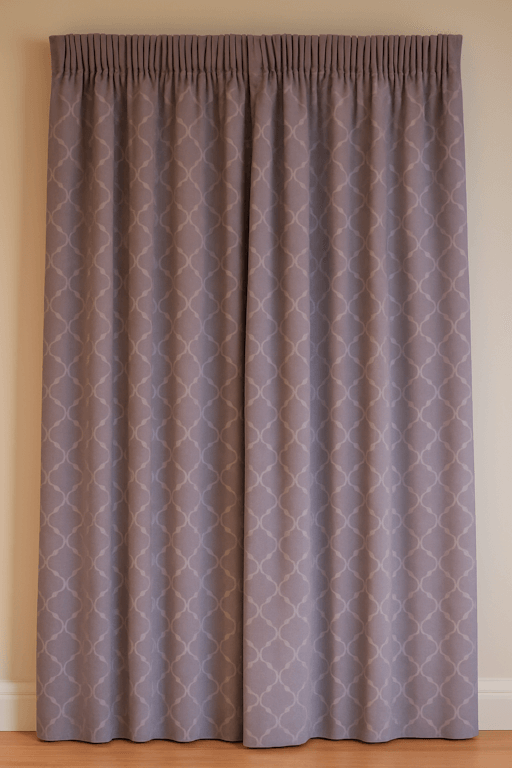
Once the room lights come on, curtains become important for maintaining privacy in the evening.
A More Privacy-Focused Roller Blind Approach
If you mainly want the blinds themselves to provide privacy both day and night, then a denser roller blind fabric usually makes more sense.
These fabrics still allow some natural light through, but not nearly as much as sheer fabrics. They also remove most of the visibility out when the blinds are lowered.
Many people using this style of blind will leave them partly lowered during the daytime. This often provides enough privacy from the street while still letting light into the upper part of the room.
This tends to be a more privacy-focused and traditional approach compared to the lighter, more open feel of sheer roller blinds.
Vertical Blinds for Bay Window Privacy
Vertical blinds remain a very practical privacy solution for front-facing bay windows, especially where flexibility and affordability are important.
Unlike roller blinds, sheer fabric options are not really part of the vertical blind market. Instead, the fabrics range from lighter materials which allow quite a lot of light through, right through to blackout fabrics.
During the day, the slats are usually tilted partly open. This allows light into the room while still giving privacy from outside. In the evening, the slats can be rotated flat and overlapped to provide a much higher level of privacy.
Vertical blinds can also be fully pulled off to the side to clear most of the window. However, in many homes they tend to stay across the window most of the time.
A lot of people choose vertical blinds because they are practical, versatile and often one of the lower-cost blind options for larger bay windows.
On their own, vertical blinds can sometimes make a bay window feel a little more functional or commercial compared to softer layered treatments. Because of this, many homeowners combine them with curtains to soften the overall look and add warmth to the room.
Wood Venetian Blinds for Front-Facing Bay Windows
Wood and faux wood Venetian blinds have become a very popular privacy option for bay windows, especially in modern and minimalist interiors.
Although commonly referred to as wooden blinds, many of the most popular versions sold today are actually faux wood styles, which tend to be more affordable and easier to maintain.
Much like vertical blinds, the slats are usually tilted partly open during the daytime to balance light and privacy. At night, they can be fully closed for much greater privacy.
While Venetian blinds can technically be raised fully upwards, the deep stack created by the headrail and slats means many people rarely pull them right up except for cleaning behind the blind.
Many homeowners still combine this blind style with curtains. The curtains help soften the structured appearance of the blinds while also adding another thermal layer during colder months.
That said, some people prefer using Venetian blinds on their own, particularly in very clean and minimalist interiors where they want a simpler look with fewer fabric layers.
Why Curtains Still Matter on Front-Facing Bay Windows
Even when blinds are fitted, curtains still play an important role in many front-facing bay windows.
Curtains soften the overall look of the room, improve insulation during colder weather and provide the final layer of privacy once the lights come on at night.
This is why many bay windows end up using a layered approach rather than relying on a single window treatment to do everything.
Lee’s Advice
In many homes, the blinds handle daytime privacy while the curtains provide softness, warmth and night-time privacy. Once you start looking at bay windows this way, choosing the right combination becomes much easier.
Living Rooms and Bedrooms Usually Need Different Privacy Solutions
Living rooms often benefit from lighter privacy solutions because people usually want to keep the room feeling bright and open during the daytime.
Bedrooms are different. Privacy and darkness are usually much more important, particularly if the room faces a streetlight or early morning sun.
This is why bedroom bay windows often use blackout curtains, blackout blinds or a combination of both, whereas living room bays usually focus more on balancing privacy with natural light.
Balancing Privacy Without Making the Room Feel Closed In
One of the biggest challenges with front-facing bay windows is improving privacy without making the room feel dark or disconnected from outside.
Bay windows are designed to bring extra light into the room, so completely blocking them can sometimes remove one of their best features.
The best solutions usually balance:
- privacy from outside
- natural light
- visibility out
- softness inside the room
- how the house looks from the street
Think About the View from Outside Too
Front-facing bay windows have a big impact on how the house looks from the street, especially on homes where the upstairs and downstairs bays visually line up together.
The curtains inside the rooms do not necessarily need to match exactly. Bedrooms and living rooms often naturally use different colours and fabrics.
However, many homeowners prefer to keep the blind styles and colours reasonably consistent across the main front windows of the house. This usually creates a more balanced and coordinated appearance from outside.
Some people prefer a more individual approach room by room, which is completely fine too. The important thing is simply to think about both the inside and outside appearance before making final decisions.
Common Front-Facing Bay Window Privacy Mistakes
Blocking Too Much Light
Choosing privacy solutions which are too heavy can sometimes make the room feel darker and more enclosed than necessary.
Forgetting About Night-Time Privacy
Some blinds work brilliantly during the day but offer very little privacy once the room lights come on in the evening.
Ignoring the Outside Appearance
Very different blind styles or colours across front-facing bay windows can sometimes make the house feel visually disconnected from outside.
Need Help Choosing the Right Curtain Track?
Once you know how you want the blinds and curtains to work together, the next step is choosing the right curtain track for your bay window.
If you are not sure which track setup will work best with your chosen privacy solution, our curtain track finder can help point you in the right direction.
FAQs About Front-Facing Bay Window Privacy
Sheer roller blinds are often one of the best options for daytime privacy because they allow natural light into the room while making it difficult for people outside to see clearly in during the day.
Not fully. Once the room lights come on in the evening, sheer blinds offer much less privacy. Curtains are usually still needed for proper night-time privacy.
Yes. Vertical blinds are practical, versatile and provide adjustable privacy throughout the day. Many people combine them with curtains to soften the appearance.
No. Some people prefer a cleaner and more minimalist look using blinds only. However, many homeowners still use curtains to soften the room and improve night-time privacy.
They do not have to match perfectly, but many homeowners prefer to keep the blind styles and colours reasonably consistent across the main front windows of the house for a more balanced appearance from outside.
Helpful Guides to Read Next
These guides go into more detail if you already know which direction you are leaning towards.

Sheer curtains instead of blinds?
This guide discusses whether sheer curtains might be an alternative option for your bay window.

Roller blinds and curtains in a bay window
Discover all your options for roller blinds and curtains in a bay window.

Should All Bay Windows in a House Match?
A helpful guide for deciding whether or not all your front facing bays should match.