Are Wave Curtains Suitable for Bay Windows?
Yes, wave curtains can work beautifully in a bay window. In fact, many customers choose wave curtains because they create a clean, modern look with smooth folds running evenly around the bay.
The key is making sure the curtain track is positioned correctly. Wave curtains need more space than standard curtains so the folds can hang freely without catching on the window sill or rubbing against the walls.
The good news is that you do not need to work this out yourself. We calculate the correct track position from your measurements when making your bay window wave curtain track.
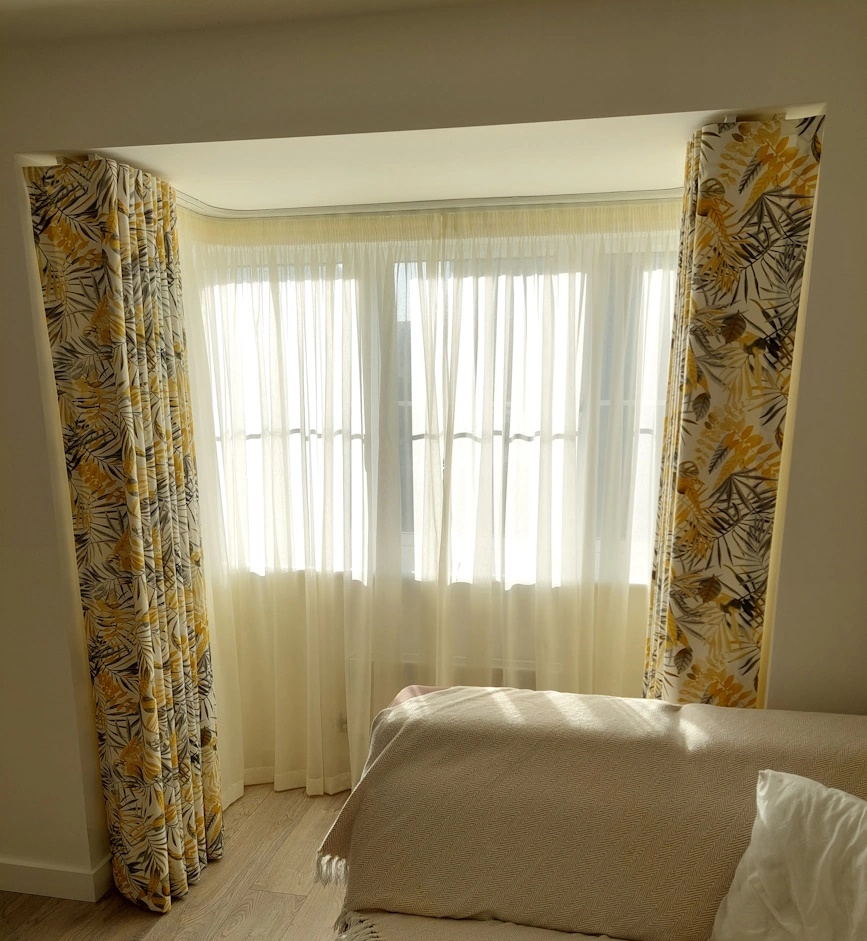
Yes, Wave Curtains Work Very Well in Bay Windows
Many people assume wave curtains only work on straight windows. In reality, they can work extremely well in bay windows when paired with the correct made-to-measure curtain track.
The wave effect continues around the bends in the bay, creating a clean and contemporary appearance while still allowing the curtains to move smoothly.
The Biggest Difference Is the Track Position
A standard bay window curtain track can usually be fitted relatively close to the window.
A wave curtain track needs more clearance because the curtain hangs directly underneath the track and forms soft folds that move backwards and forwards as they travel around the bay.
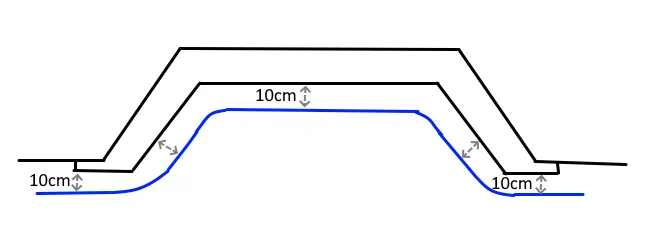
To allow enough space for these folds, the centre of the wave curtain track is normally positioned around 10cm in front of the window sill and surrounding walls.
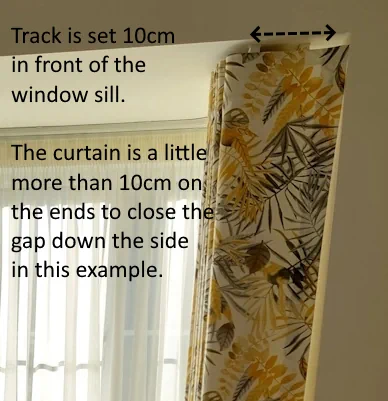
Why Do Wave Curtains Need More Space?
Unlike standard curtain gliders, wave curtains create a series of regular folds that project both forwards and backwards from the track.
If the track is fitted too close to the window, the folds can catch on the window sill, rub against the side walls, or prevent the curtains from hanging correctly.
Allowing extra space ensures the waves can form naturally and move freely around the bay.
Lee’s Advice
This is one of the biggest mistakes people make when planning wave curtains. The curtain track may physically fit closer to the window, but that doesn’t necessarily leave enough room for the wave folds to work properly.
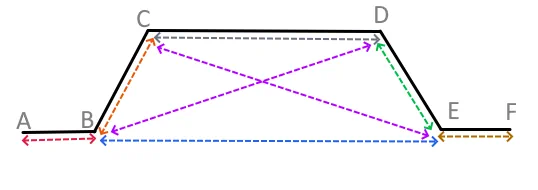
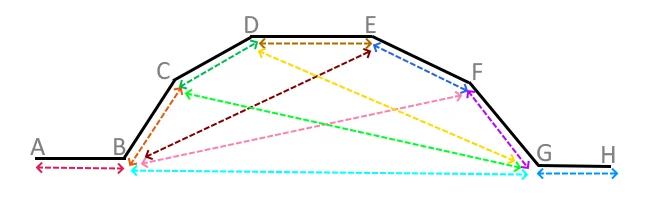
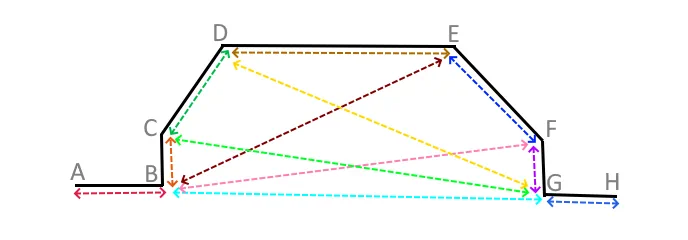
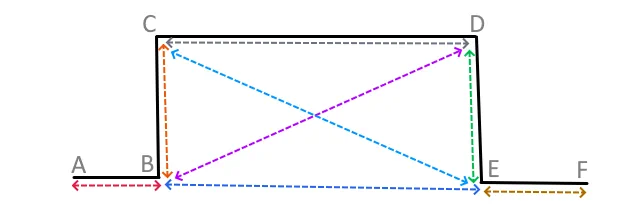
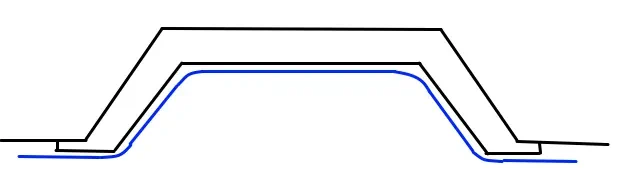
These 2 diagrams below show bay windows with deep window sills looking straight down.
Why Most Wave Bay Window Tracks Are Ceiling Fixed
Most bay windows have a window sill that projects out from the wall.
Once you add the depth of the sill and the extra clearance needed for the wave folds, the track often needs to sit quite a long way into the room.
For this reason, many wave bay window curtain tracks are ceiling fixed within the bay.
Outside the bay, the returns may be either ceiling fixed or wall fixed depending on the room layout and ceiling height.
Can Wave Bay Window Tracks Be Wall Fixed?
Sometimes, yes.
Wall fixing usually works best where there is little or no window sill projection to consider.
One example is a bay window with a bulkhead above the window that already projects out to a similar position as the front edge of the sill.
Another situation is some older Victorian and Edwardian bay windows where the sill projection is relatively shallow.
However, these properties often have deep decorative coving, which can make ceiling fixing difficult and increase the importance of choosing the correct fixing position.
How Do I Measure a Bay Window for Wave Curtains?
The good news is that measuring for a wave bay window curtain track is no more complicated than measuring for one of our standard bay tracks.
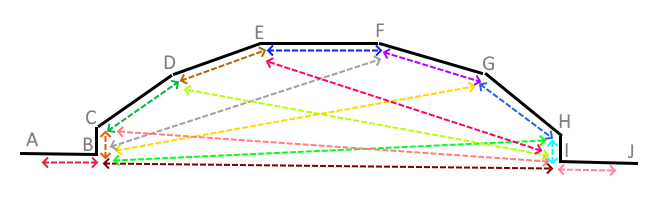
You will as for all our bay tracks be measuring your bay window. Simply follow the appropriate measuring guide for your bay window shape and provide the dimensions shown. Don’t measure for the curtain track position.
We then calculate the correct wave track position as part of the manufacturing process.
You do not need to work out the 10cm projection yourself.
Still Unsure then Let Us Help You
Let the curtain track finder help you decide which track is best for your window. Or you can get advice on how to deal with your bay window by send a couple of photos.