

Why Bay Window Curtains Don’t Hang Properly
If your bay window curtains flare out, leave gaps, catch on the sill, or never seem to close neatly, the curtains are not always the problem.
In many cases, the issue is the position of the curtain track. A bay window track needs to be planned around the sill depth, radiator position, curtain length, returns, and how you want the curtains to hang.
Quick Answer
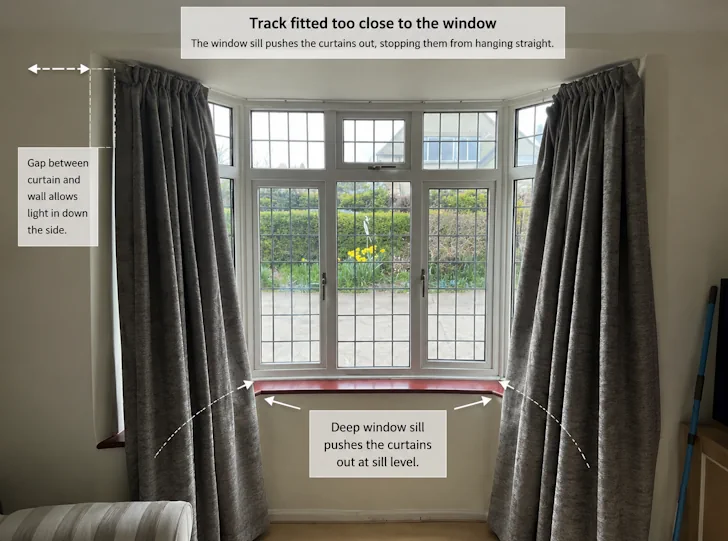
Bay window curtains usually fail to hang properly because the track has not been positioned to suit the way the curtains need to hang.
If the track is too close to the window, deep sills can push the curtains forward. If the track does not return out of the bay, you can get gaps down the sides. If the curtains do not overlap properly in the middle, you can also get annoying light gaps when they are closed.
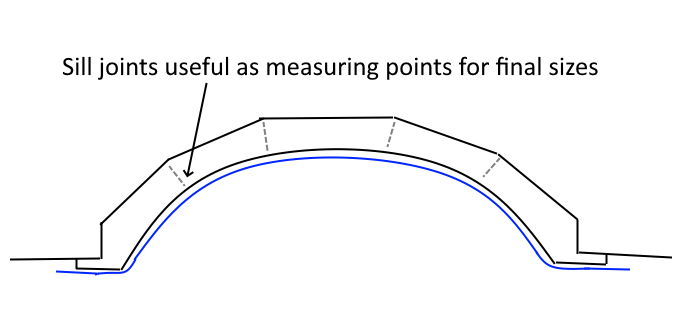
This image above shows the correct track positions for a bay window with returns. this position works for any bay shape.
Discover how to measure your bay shape properly
The Track Is Fitted Too Close to the Window
One of the most common reasons bay window curtains do not hang properly is that the track has been fitted too close to the window.
This can be a problem if the bay has a deeper window sill and you want the curtains to hang below the sill, to the top of a radiator, or down to the floor.
If the track is too close to the window, the sill pushes the curtains out at sill level. This stops the curtains from hanging straight and can make the whole bay look awkward.
Deep Window Sills Can Push the Curtains Out
Deep bay window sills are one of the biggest reasons curtains flare out or hang badly.
The solution is usually to position the track just in front of the sill, so the curtains can hang straight down instead of being pushed forward.
This is one reason ceiling fixed bay window curtain tracks are often the better option for deep sill bays. Ceiling fixing gives much more flexibility over where the track can sit.
Why Returns Matter on Bay Window Tracks
Returns are the sections of track that wrap out of the bay on each side.
When you are hanging longer curtains over a deeper window sill, returns can make a big difference. They allow the curtains to wrap around the ends of the sill instead of stopping inside the bay.
This helps reduce the large gaps that can otherwise appear down the sides of the bay when the curtains are closed.
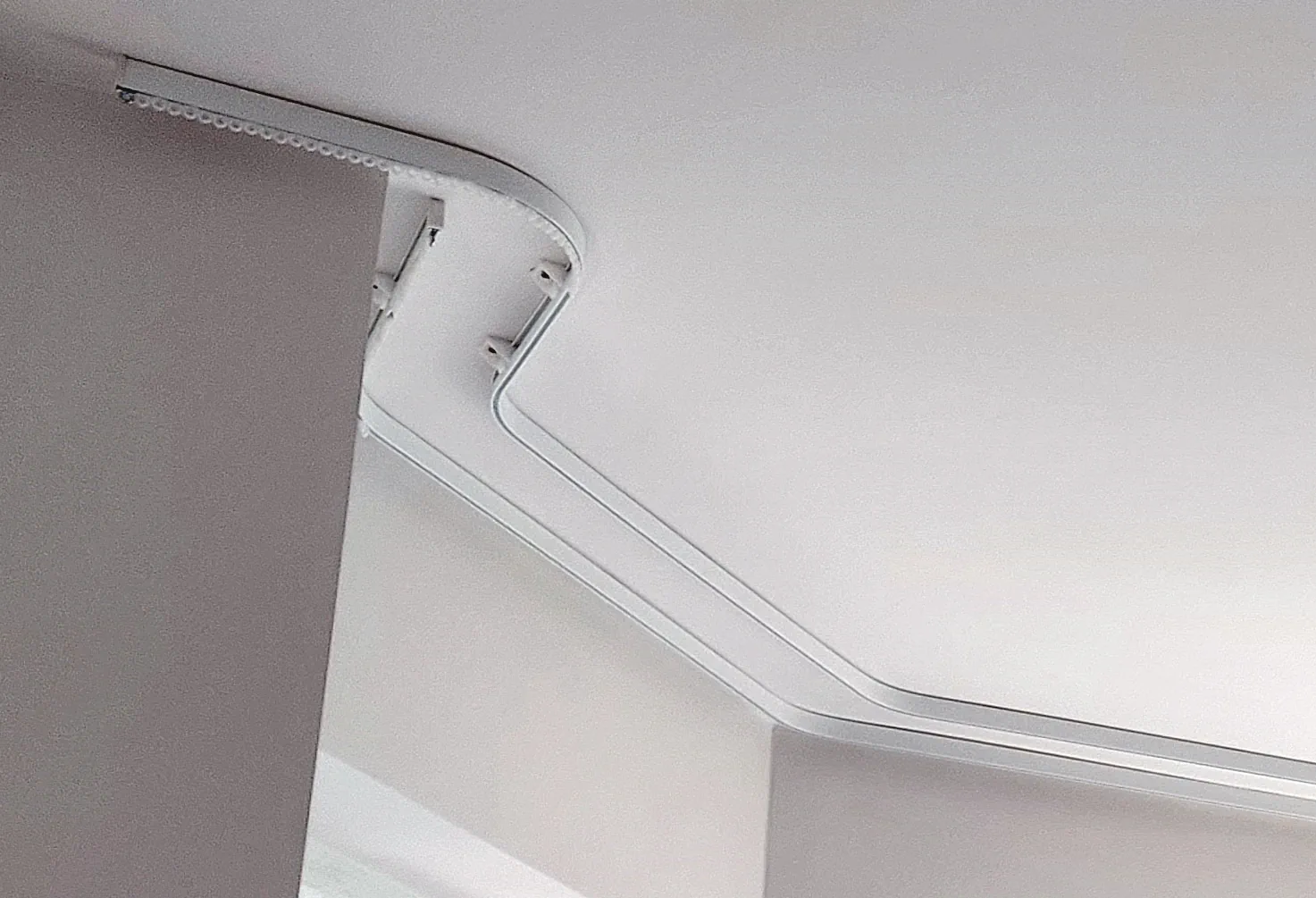
See how this curtain track curves smoothly on the retunr out of the bay.
If your curtains are floor length or hanging in front of a deep sill, returns are often one of the most important parts of getting a neat finish.
Discover more about bay window curtain track returns here.
Radiators Can Also Affect How Curtains Hang
If you have a chunky radiator under the window sill, this also needs to be considered when positioning the track.
If the track is fitted without allowing for the radiator projection, the curtains may be pushed forward lower down, even if they clear the sill itself.
This is why it is important to think about the full path of the curtain from top to bottom, not just where the track will be fitted.
Read more about allowing for radiators with bay window curtains here.
DIY Curtain Tracks Can Leave Gaps Above the Curtains
Some DIY curtain tracks can still leave gaps above the curtain heading, even when they are ceiling fixed.
This is because the brackets can hold the track slightly down from the ceiling. Even a small gap can allow light to show over the top of the curtains.
For most rooms this may not be a major problem, but it becomes much more noticeable if you are trying to achieve a darker finish with blackout curtains.
Curtains Not Overlapping Properly in the Middle
Another common issue is where the two curtains simply butt together in the middle when closed.
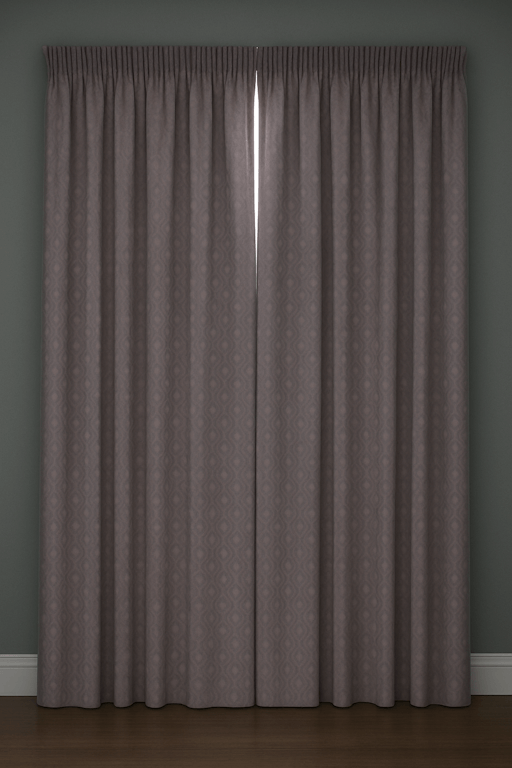
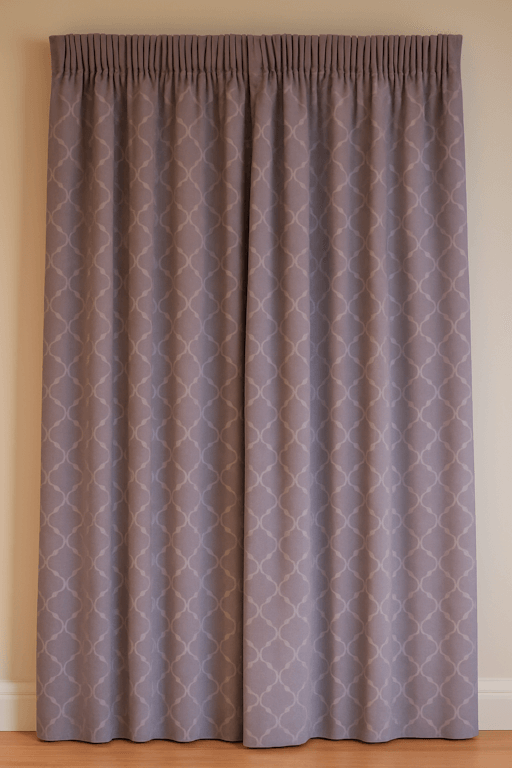
Even if you pull the curtains across slightly lower down, you can still be left with a small light gap at heading level.
The neatest solution is usually to have the track overlap slightly in the middle or use an overlap arm in the glider channel. This allows one curtain to pass over the other when closed.
Read more about curtain overlap and reducing centre light gaps
Blackout Curtains Make Fitting Problems More Obvious
Poor track positioning becomes even more noticeable when using blackout curtains.
Small gaps at the top, sides or centre of the curtains can allow surprising amounts of light into the room, reducing how effective the blackout curtains feel.
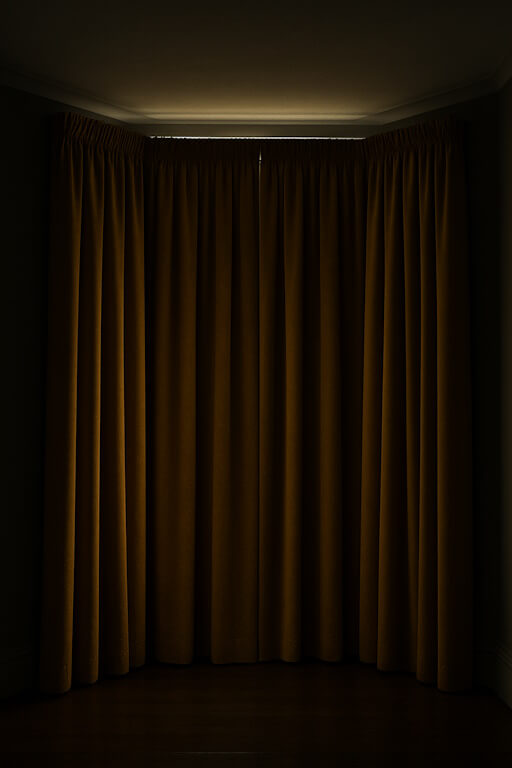
Blackout curtains usually work best with careful track positioning, suitable returns, ceiling fixing where possible, and proper curtain overlap.
Why Bay Window Curtains Can Look Uneven
Sometimes curtains look uneven because the bay window, ceiling, sill or floor is not perfectly level.
This is especially noticeable with floor length curtains, where even small differences in floor level can make the curtain bottoms look slightly uneven.
This is a separate issue from poor track positioning, but it is another reason bay windows need to be planned carefully.
Why Made to Measure Tracks Usually Give a Better Finish
A made to measure bay window curtain track can be shaped and positioned around the way you want the curtains to hang.
This means the track can allow for deep sills, returns, curtain length, radiators and the best fixing position before it is made.
Rather than trying to make a standard track fit an awkward bay, the track is made to suit the bay and the curtains you want to hang.
Frequently asked questions
This is often caused by the track being fitted too close to the window.
If the bay has a deep sill, the sill can push the curtains forward instead of allowing them to hang straight down.
Side gaps often happen when the curtain track stops inside the bay instead of returning out into the room.
Returns help the curtains wrap around the ends of the bay and reduce side light gaps.
In many bay windows, yes. Ceiling fixing gives more freedom to position the track where the curtains need to hang.
This is especially useful with deep sills, longer curtains or floor length curtains.
Blackout fabric only blocks light where the fabric covers the window properly.
If there are gaps at the top, sides or middle of the curtains, light can still leak into the room.
If the curtains simply butt together, a small light gap can remain at the heading level.
A track overlap or overlap arm allows one curtain to pass over the other for a neater closed finish.
Yes. A made to measure track can be shaped and positioned to suit your bay window, sill depth, curtain length and fixing requirements.
This usually gives a much neater result than trying to adapt a standard DIY track to an awkward bay.
Still Unsure then Let Us Help You
Let the curtain track finder help you decide which track is best for your window. Or you can get advice on how to deal with your bay window by send a couple of photos.