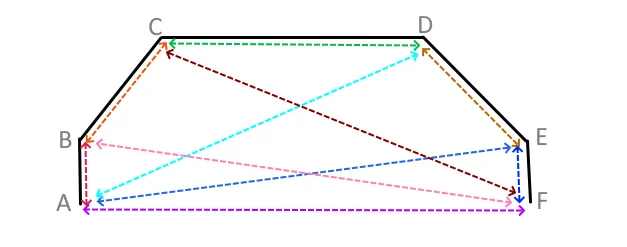
Should Curtains Sit Inside or Outside a Bay Window?
The right answer depends on your bay shape, window sill, room layout, and how you want your curtains to look when they are open.
Some bay windows work best with curtains staying neatly inside the bay. Others look and perform much better when the curtain track returns out of the bay and onto the side walls.
There is no single rule that works for every bay window, but there are a few practical clues that usually point you in the right direction.

Quick Answer
Curtains usually work best inside the bay when there is furniture, shelving, a beam, or very little wall space outside the bay.
Curtains usually work best returning outside the bay when you want floor-length curtains, better light control, more curtain stacking space, or a fuller feature look.
When Curtains Should Stay Inside the Bay
In some rooms, keeping the curtains inside the bay window is not just a style choice — it is the only practical option.
If you have something outside the bay on one or both sides, such as a wardrobe, built-in shelving, a radiator cover, or fitted furniture, there may be nowhere for the curtain track to return onto the side walls.
In this situation, the curtain track normally needs to stay within the shape of the bay. The curtains then open and stack within the bay itself.
This can still look very neat, especially if you prefer a more understated finish and do not want the curtains to become a big feature in the room.
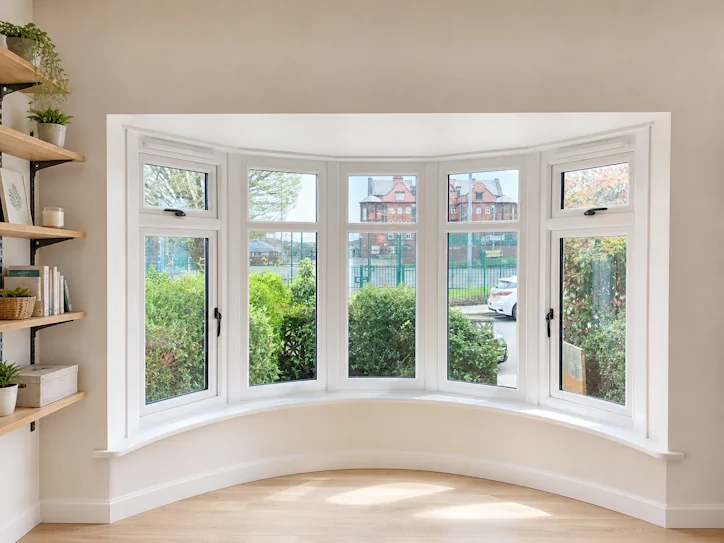
The shelves on the left prevent the track returning out of the bay.
This window would be best with sill length curtains within the bay.

The wardrobe on the left prevents the track returning out of the bay.
This window could have floor length curtains within the bay as the window sill is shallow and doesn’t push the curtains out.
When Returning Outside the Bay Works Better
If you have clear wall space on both sides of the bay, returning the curtain track outside the bay can be a really good option.
This means the track follows the shape of the bay, then continues around the outside corners and onto the return walls.
The big advantage is that your curtains can stack further away from the side windows when open. This lets more daylight into the room and helps show off the full shape of the bay window.
It also works especially well if you want full-length curtains that hang down to the floor and make the bay window more of a feature.

This bay window Works well with floor length curtains returning out of the bay on each side.
This allows the curtains to stack off the side windows allowing more light into the the room.
If Your Bay Window Sill Sticks Out at the Sides
A projecting bay window sill is one of the biggest reasons to choose returns on your curtain track.
If the curtain track stops inside the bay, the curtains may hang in front of the sill but leave large gaps down the outside edges. This can look untidy and may also let more light through at the sides.
By returning the track out of the bay, the curtains can wrap around the ends of the sill and onto the side walls. This usually gives a much neater finish.
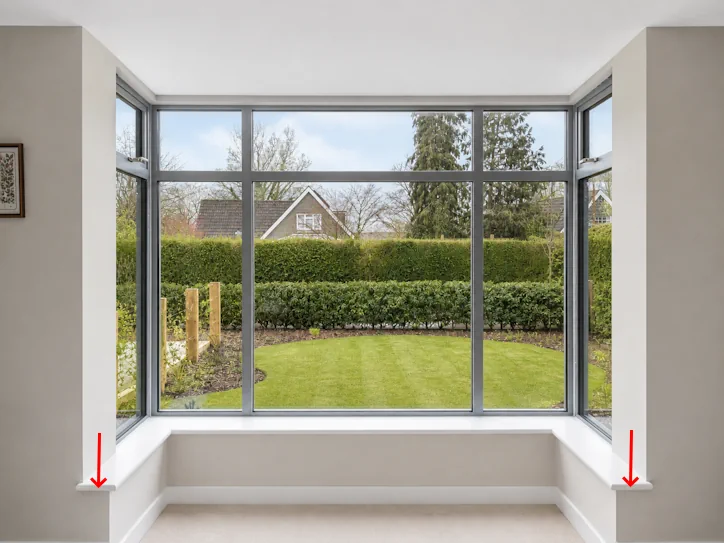
On this bay if you want to hang long curtains. then you will need a bay window curtain track with returns.
This will allow the curtains to wrap around the ends of the window sill closing gaps on the sides of the bay.
If Your Bay Has Narrow Side Walls
Some bay windows have very narrow side walls within the bay. This means there is not much room for the curtains to stack when they are open.
If the curtains stay inside the bay, they may cover a large part of the side windows even when fully open.
In this situation, returning the track outside the bay often gives a better result. The curtains can stack further out on the return walls, leaving more of the bay window clear.
When a Beam Across the Bay Stops the Track Returning Out
Some bay windows have a beam or boxed section running across the front of the bay. This can prevent the curtain track from returning out of the bay.
These bays are often linked with a deeper window sill too, which can limit the options even further.
In this type of bay, the most practical solution is often to keep the curtains within the bay and have them hang down to the top of the window sill.
It may not give the same dramatic look as floor-length curtains with returns, but it can still look clean, tidy, and well planned.
Sometimes It Is Just a Style Choice
Not every decision is caused by a practical problem. Sometimes both options are possible, and it simply comes down to the look you prefer.
If you want the curtains to look subtle and keep the bay window feeling open, you may prefer the curtains to stay inside the bay and hang to the sill or just below it.
If you want the bay window to become more of a feature, you may prefer the track to return outside the bay with full-length curtains hanging down to the floor.
Neither option is wrong. The best choice is the one that works with your bay shape, your room layout, and the way you want the finished curtains to feel.
Lee’s Advice
If your bay allows it, returning the curtain track outside the bay often gives the best all-round result. It gives the curtains more room to stack, helps reduce side gaps, and can make the bay window look softer and more finished.
But if furniture, built-in shelving, a beam, or the shape of the room stops the track returning out of the bay, keeping the curtains inside the bay is usually the right choice.
The key is not to force a style that your bay window does not really allow. A simple, well-planned solution will always look better than trying to make the wrong layout work.
Still Not Sure Which Option Is Best?
If you are unsure whether your curtains should sit inside or outside your bay window, it usually helps to look at the shape of the sill, the available wall space, and where the curtains will stack when open.
You can also use our curtain track finder to help narrow down the best option for your bay window.
If you still have a few specific questions, the answers below should help…
Frequently asked questions
Is it better for bay window curtains to sit inside or outside the bay?
It depends on the shape of your bay, your window sill, and how much wall space you have at each side.
If you have clear return walls and want full-length curtains, taking the track outside the bay often gives the best finish. If furniture, shelving, or a beam blocks the sides of the bay, keeping the curtains inside the bay is usually the better option.
When should curtains stay inside the bay window?
Curtains usually need to stay inside the bay when:
This setup often works well with sill-length curtains or curtains that hang just below the sill.
When should a bay window curtain track return outside the bay?
Returns are usually a good idea when you want the curtains to stack away from the side windows, reduce gaps at the edges, or create a fuller floor-length curtain look.
They are especially useful if your bay window sill sticks out at the sides, as the curtains can wrap around the ends of the sill instead of leaving large gaps down the outside edges.
Do I need returns if my bay window has a deep sill?
Often, yes.
If the sill projects out at the sides of the bay, returns usually help the curtains wrap around the sill and sit more neatly against the return walls.
Without returns, the curtains may stop inside the bay and leave visible gaps down the sides, especially with floor-length curtains.
What if there is a beam across the front of my bay window?
If a beam or boxed section runs across the front of the bay, it may stop the curtain track from returning out onto the side walls.
In this situation, the most practical option is often to keep the curtain track inside the bay. These bays often work best with curtains hanging down to the top of the window sill rather than full-length curtains.
Will curtains block too much light if they stay inside the bay?
They can do, especially if your bay has narrow side walls and there is not much room for the curtains to stack when open.
If you have enough wall space outside the bay, returning the track out of the bay can help the curtains stack away from the side windows. This usually lets more daylight into the room when the curtains are open.
Can bay window curtains hang down to the floor?
Yes — floor-length curtains can look beautiful in a bay window, especially when the track returns outside the bay and the curtains stack onto the side walls.
However, if your bay has a deep sill, furniture below the window, or a beam across the front, sill-length curtains may be the more practical choice.
What if I’m still not sure which option is best?
Don’t worry — this is one of the most common decisions people struggle with.
The easiest way to decide is to look at three things:
If you are still unsure, you can use our curtain track finder or send us a photo of your bay window and we’ll point you in the right direction.
Helpful Guides to Read Next
These guides go into more detail if you already know which direction you are leaning towards.
What Are Returns on a Bay Window Curtain Track?
A simple guide explaining what returns are, when you need them, and how they help your curtains wrap neatly around the sides of the bay.

How to Measure a Bay Window Track with Returns
If your curtains are going to return outside the bay, this guide shows you how to measure the bay and the return walls correctly.
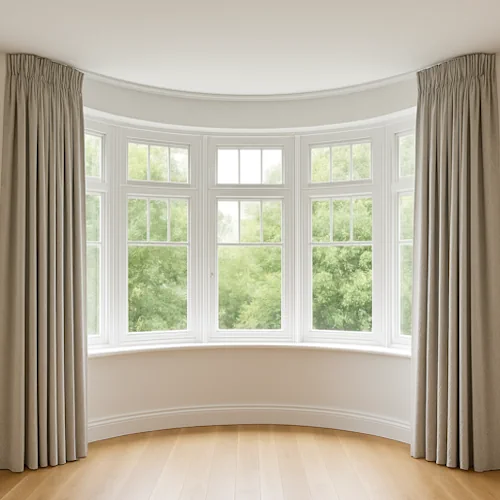
Should Bay Window Curtains Be Sill Length or Floor Length?
A helpful guide for deciding whether your curtains should stop at the sill, hang just below it, or continue down to the floor.
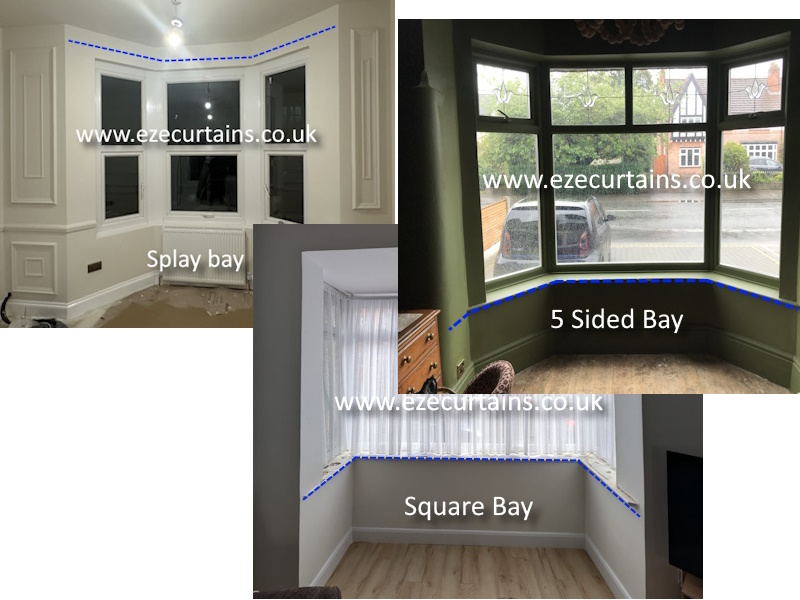
Bay Window Help & Planning
Not sure where to start? This section brings together practical bay window curtain advice before you measure or order.