Do Wave Curtains Need a Special Track?
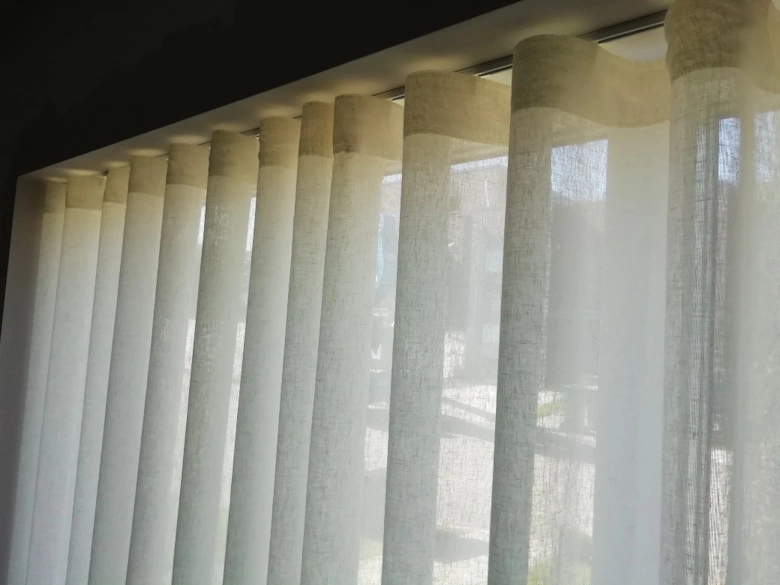
Yes, wave curtains do need a specialist wave curtain track system. More specifically, they need wave gliders that are connected together at set distances.
These connected gliders are what create the smooth, even folds that make wave curtains look so neat and modern.
However, the gliders are only part of the answer. Wave curtains also hang differently from standard curtains, which means the track usually needs to be fitted in a different position too.
This is especially important in bay windows, where the curtain needs enough room to wave forwards and backwards without rubbing on the window sill, walls or brackets.
Do Wave Curtains Need a Special Track?
Yes. Wave curtains need a curtain track fitted with specialist wave gliders.
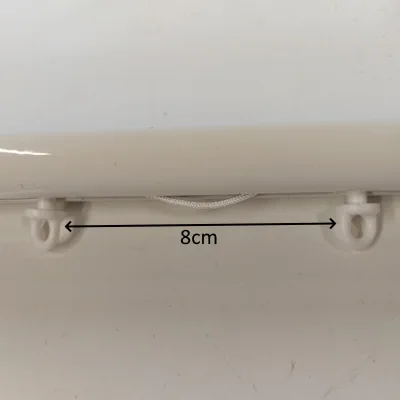
On a standard curtain track, each glider normally moves independently. With a wave curtain track, the gliders are connected together with a very thin cord.
This cord controls the maximum distance between each glider. That fixed spacing is what helps create the smooth, even waves in the curtain.
Lee’s Advice
The wave effect is not just about the curtain fabric. The track, gliders, hook spacing and fitting position all need to work together.
What Is the Difference Between a Standard Track and a Wave Track?
A standard curtain track is usually fitted with loose gliders. If the curtains are not attached, you can slide each glider along the track separately.
A wave curtain track works differently. The gliders are linked together, so when one glider moves, it pulls the next glider along with it.
This keeps the spacing between the hooks consistent and helps the curtain form regular waves from one side of the track to the other.
How Wave Curtain Gliders Work
Wave gliders are connected by a small cord. This cord stops the gliders spreading too far apart.
When the curtain is pulled across the track, the gliders stay evenly spaced. The curtain fabric then folds forwards and backwards in a smooth repeating pattern.
This is what gives wave curtains their clean, uniform look whether the curtains are fully closed, partly open or stacked back at the sides.
Can I Add Wave Gliders to Any Curtain Track?
The honest answer is yes and no.
Yes, wave gliders can sometimes be fitted into a standard curtain track if they physically fit the glider channel.
But no, that does not automatically make it a good wave curtain track.
Wave curtains need more than connected gliders. They also need the correct curtain heading tape, correct hook spacing, suitable track position and enough space for the curtain waves to move freely.
This matters even more in a bay window, where the curtain has to move around bends while still keeping the wave folds neat and even.
Why Is the Hook Spacing Different on Wave Curtains?
Wave curtains are hooked very differently from pencil pleat curtains.
With pencil pleat curtains, hooks are usually placed much closer together, often every fourth or fifth pocket on the heading tape.
With wave curtains, the hooks are spaced much wider apart, often around every fifteenth or sixteenth pocket depending on the tape and wave system being used.
This wider spacing allows the curtain to form larger, smoother folds that wave forwards and backwards beneath the track.
The end hooks are also usually set in from the outside edges of the curtain. This allows the curtain edges to turn back neatly under the track, so the outside edges sit in line with the rear fold of the wave.
Why Does the Track Position Matter So Much?
Wave curtains do not hang in quite the same way as standard curtains.
With many standard curtain tracks, the curtain hangs slightly in front of the track. With wave curtains, the curtain waves backwards and forwards beneath the track.
Because of this, the track usually needs to sit further away from the window than a standard curtain track.
As a general guide, the centre of the wave track is often positioned around 10cm away from the window, or more commonly around 10cm in front of the window sill if the sill projects into the room.
This gives the back of the curtain wave enough space to move without rubbing on the sill, skirting boards or side walls.
Lee’s Advice
With wave curtains, clearance is everything. If the track is too close to the window, the curtain may catch, rub or lose its neat wave shape.
Are Wave Curtain Tracks Better Ceiling Fitted or Wall Fitted?
In most cases, wave curtains look best on a ceiling fitted track.
Ceiling fitting usually gives a cleaner appearance because there are no long wall brackets visible above the curtain.
It also gives more flexibility when positioning the track far enough away from the window, sill or wall.
This can be especially useful with bay windows, where the track position needs to be carefully planned so the waves have enough room to move around the shape of the bay.
What About Wave Curtain Tracks in Bay Windows?
Wave curtains can work beautifully in bay windows, but the track position is more important than it is with standard curtains.
In a bay, the curtain does not just travel in a straight line. It needs to move around bends while keeping the wave spacing consistent.
If the bay has a suitable ceiling and almost all do, a ceiling fitted wave bay track is usually the neatest option.
However, some bay windows have a lower ceiling inside the bay. so it the wave track needs to return out of the bay on each side. Then it will need to be supported with a long projection wall fixed bracket. This allows the track to be far enough off the wall. Allowing the wave curtains to hang freely.
Sometimes having large decorative coving around the top of the room, including in the bay window. Can prevent the wave track fitting to the ceiling in the right position. Then wall fixing is the only option. This assumes you don’t have a deep window sill.
Why Are Wall Brackets Sometimes Okay on Bay Returns?
On the return walls outside a bay window, wall brackets can often work well because the curtains hang in front of them.
This means the brackets are mostly hidden behind the curtain when the curtains are open or stacked back.
On a straight wall, however, lots of long projection brackets can be much more visible. This is why ceiling fitting is usually preferred where possible.
What Happens If a Wave Track Is Fitted Too Close to the Window?
If a wave curtain track is fitted too close to the window, the curtain may not have enough room to form properly.
The back of the wave can rub against the window sill, wall, skirting board or window frame.
This can cause the curtains to drag, catch or sit awkwardly instead of forming smooth, even folds.
In a bay window, poor track position can also make the curtains harder to pull around the bends.
This is why wave curtains need a little more planning than standard curtains. The look is simple, but the fitting position needs to be right.
FAQs About Wave Curtain Tracks
Yes. Wave curtains need a track fitted with specialist wave gliders. These gliders are connected together to keep the curtain folds evenly spaced.
Not usually. Some tracks may accept wave gliders, but the track still needs to be positioned correctly and used with suitable wave heading tape and hook spacing.
The connecting cord keeps the gliders evenly spaced. This fixed spacing helps create the smooth, regular wave shape in the curtain.
As a general guide, the centre of the track is often positioned around 10cm away from the window or around 10cm in front of the window sill if the sill projects into the room.
Usually, yes. Ceiling fitting gives a cleaner appearance and makes it easier to position the track correctly. Wall brackets can still be used where ceiling fitting is not practical.
Next Step: Choosing the Right Wave Track
If you like the look of wave curtains, the next step is making sure the track, gliders and fitting position are suitable for your window.
This is especially important for bay windows, where the track needs to follow the shape of the bay while still giving the curtain waves enough room to move freely.
Our wave curtain advice guides explain how wave curtains work, how to measure correctly, and what to check before ordering.
Still Unsure then Let Us Help You
Let the curtain track finder help you decide which track is best for your window. Or you can get advice on how to deal with your bay window by send a couple of photos.