Curtain Pole or Curtain Track for a Bay Window?
Both curtain poles and tracks can work in bay windows, but which one is the better choice for your particular window?
A decorative curtain pole can look lovely, especially in a traditional room. But if you want curtains that open and close smoothly around several bends, a curtain track is often the more practical option.
I’ll explain where each option works best, what to consider before choosing, and why I usually recommend a made-to-measure curtain track for bay windows.

Curtain Pole or Track? A Quick Comparison
The best choice depends on your bay shape, the curtains you want to hang and how often you’ll be opening and closing them.
| What Matters | Bay Curtain Pole | Made-to-Measure Track |
|---|---|---|
| Appearance | Decorative and visible | Neat and discreet |
| Simple angled bays | Can work well | Very suitable |
| Curved or multi-angled bays | More difficult | Shaped to suit the bay |
| Curtain movement | Rings may catch at bends or brackets | Gliders travel through smooth bends |
| Fitting | May need careful alignment and adjustment | Arrives already shaped and ready to fit |
| Best suited to | Decorative arrangements and simpler bays | Curtains used regularly around the bay |
When a Bay Window Curtain Pole Can Work Well
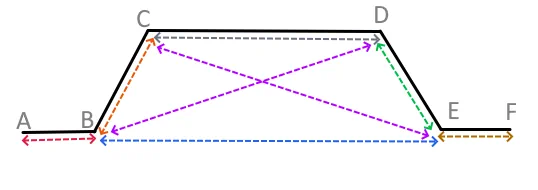
Curtain poles tend to work best in simple three-sided bays with wide, gentle angles.
For example, a splay bay with angles of around 135 degrees or more may be suitable for a bay pole, depending on the design and support brackets.
It also helps if there’s enough wall space above the windows to fit the pole at a suitable height.
Victorian and Edwardian Bay Windows
Some older properties have bays with distinct window sections separated by solid walls or pillars.
In these situations, you may be able to treat each section as a separate window, using individual straight poles rather than one continuous bay pole.
For example, you might have a pair of curtains across the wider centre window and separate curtains on the two side windows.
This can work particularly well when you’re looking for a traditional decorative appearance and don’t need the curtains to travel around the whole bay.
Where Bay Window Curtain Poles Become Less Practical
The more complicated the bay shape, the more difficult a curtain pole can become.
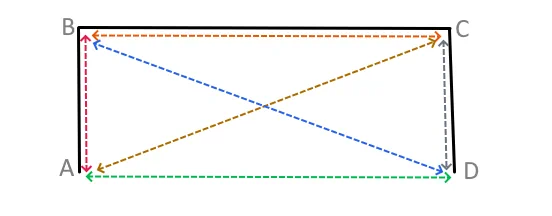
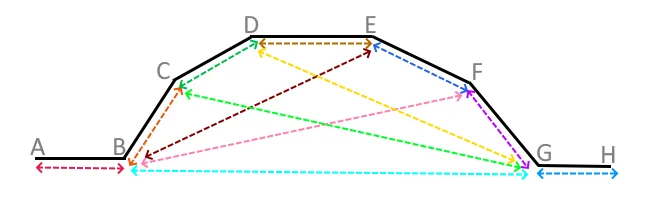
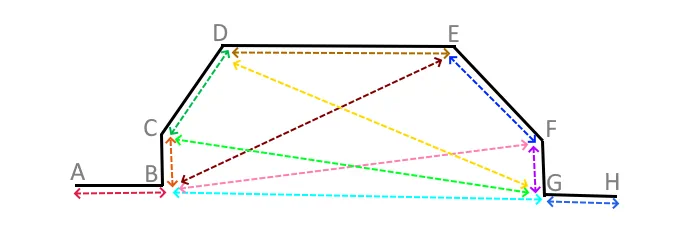
Square bays, curved bays, multi-angled bays and windows with returns can all present challenges.
The main difficulty is moving the curtains around several bends. Even if you guide the leading edge around one corner, the rest of the curtain may still be catching at an earlier bend or bracket.
This is particularly frustrating when you open and close the curtains every day.
Ceiling-Fixed Poles and Light Gaps
Another consideration is how close the curtains can hang to the ceiling.
Some ceiling-fixed bay poles need enough clearance for the brackets, pole and curtain rings.
Depending on the arrangement, this can leave the curtain heading hanging noticeably below the ceiling, potentially exposing more of the window frame or allowing light through above the curtains.
Where there’s suitable wall space above the window, a wall-fixed pole may give a better result.
What About Custom-Made Wrought Iron Bay Poles?
Custom-made wrought iron-style bay poles can be a better option than some adjustable pole systems.
They’re often manufactured from painted mild steel and may have smooth, pre-formed bends rather than adjustable corner joints.
They can work well in certain simpler bay windows, particularly with lighter curtains.
However, support is an important consideration.
Some pole systems rely on a relatively small number of main fixing points, meaning each bracket has to carry a substantial amount of weight.
By comparison, a made-to-measure bay window curtain track might have 12 to 14 support brackets across a similar width, depending on the track and window arrangement.
This spreads the load across more fixing points.
A heavy decorative bay pole therefore needs secure fixings and careful installation, particularly when supporting full-length lined curtains.
Why I Usually Recommend a Bay Window Curtain Track
For most customers who want curtains that open and close around the whole bay, I recommend a made-to-measure aluminium curtain track.
The tracks we supply are shaped to suit the individual window, with smooth bends and gliders designed to travel around the bay.
Unlike a curtain pole, the gliders don’t need to pass over exposed support brackets.
We also position the brackets to support the track around the bends, helping it remain stable when the curtains are operated.
And because your track arrives already shaped, you don’t have to bend or adjust it to fit the bay yourself.

What About Appearance?
A decorative curtain pole is designed to be seen. A curtain track is generally intended to be much less noticeable.
Our white aluminium tracks blend neatly into many ceilings and window areas, allowing the curtains themselves to become the main feature.
So Which Would I Choose?
If you have a simple three-sided bay, prefer a decorative traditional look, and don’t need to move the curtains around several bends every day, a bay pole may suit you.
But if you have a curved or multi-angled bay, want a neat ceiling-fitted arrangement, or simply want curtains that open and close smoothly, I’d generally recommend a made-to-measure curtain track.
For standard pencil pleat or pinch pleat curtains operated by hand, our Regular Bay Window Curtain Track is usually a good starting point.
You only need the overall track length to get a price and place your order. We’ll guide you through the detailed bay measurements afterwards.
Need Help Choosing the Right Track for Your Bay?
If you’ve decided a curtain track is the better option, our Curtain Track Finder can help you choose a suitable track from the range we supply.
Or, if you’re unsure which arrangement would work best, send me a couple of photographs of your bay window and I’ll be happy to help.