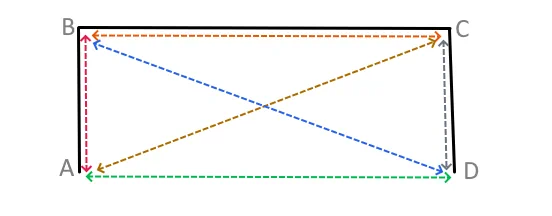
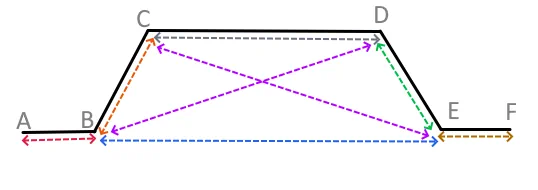
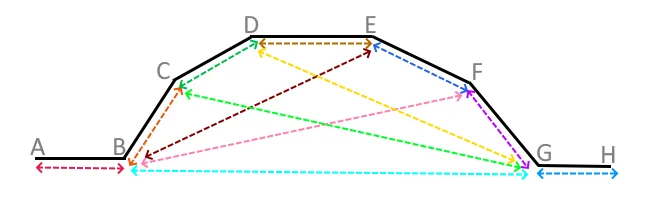
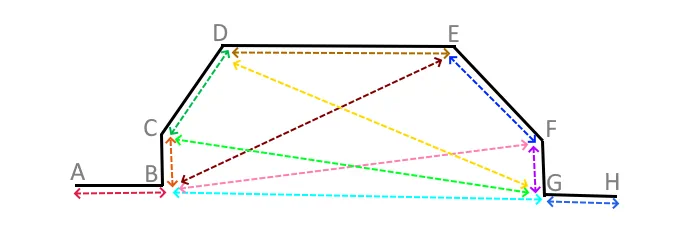
How to Fit a Curtain Track to a Bay Window Ceiling
Worried that your bay window ceiling might not be strong enough to support a curtain track? Or wondering whether you need to find the ceiling joists before you can start fitting?
These are questions I’ve heard many times over my 30-plus years of fitting bay window curtain tracks.
The good news is that fitting one of our made-to-measure bay window curtain tracks to the ceiling is usually much more straightforward than you might expect.
I’ll show you how I approach the job, using the fixings supplied with your track, and explain what to do if you come across a fixing point that needs a little extra attention.
Do You Need to Find the Ceiling Joists?
Usually, no. When fitting our bay window curtain tracks, I don’t start by trying to locate every ceiling joist.
In fact, the joists are rarely positioned exactly where every bracket needs to go. Your brackets need to support the track around the shape of the bay, rather than follow the positions of the joists.
My usual approach is to start with the screws and Uno plugs supplied with the track. These have worked well for me in a wide variety of domestic fitting situations over the years.
We also supply plenty of ceiling brackets, helping to spread the weight of your curtains across the bay.
The important thing is that the ceiling is in sound condition and every bracket is securely fixed. If an individual fixing doesn’t hold properly, that’s when I look at an alternative fixing for that particular position.
Watch My Bay Window Ceiling Fitting Guide
In this video, I explain how I approach fixing a curtain track to a bay window ceiling, including why you don’t normally need to spend time hunting for ceiling joists.
You’ll also see how I deal with different fixing surfaces and what to do if a bracket needs additional support.
Read the Video Transcript
How to Fit a Curtain Track to a Bay Window Ceiling
Hi, I’m Lee Stevens from ezecurtains.co.uk. I hear this a lot: “My ceiling isn’t strong enough for a ceiling-fixed curtain track. I need to know where the joists are so I can fix all my brackets into them.”
The truth is, for domestic windows, your ceiling is almost certainly strong enough. I’ve fitted thousands of bay tracks over nearly 30 years, and the joists are rarely in the perfect places for every bracket anyway—so you don’t need to find every single one.
The Big Idea (Don’t Overthink the Joists)
- Most domestic ceilings are hollow (lath & plaster or plasterboard). That’s normal.
- You’ll usually hit some timber with a few screws—great—but it’s not essential for every bracket.
- Start with the supplied screws and plugs; they work for 95–98% of fittings.
- Only reach for alternative fixings if a particular spot isn’t firm enough.
Basic Fitting Approach
- Present the pre-bent track to the ceiling and position it to your marks.
- Drive the supplied screws straight through the bracket holes into the ceiling.
- Note which brackets feel solid (often the end brackets hit a lintel) and which need extra attention.
- If a fixing isn’t firm: slide the bracket aside, drill a pilot/hole as needed, add a suitable plug, slide the bracket back, and re-fix.
Fixing Into Different Materials
Timber lintel (often in older houses): Drive the screws straight in—nice and secure.
Metal lintel (common in newer houses): Use a 3.5 mm high-speed steel (HSS) drill bit to make a pilot hole, then drive the supplied screws directly—no plug needed.
Brick returns (where the track turns out of the bay): Use the supplied red plugs. Drill a 6 mm hole with a masonry bit, insert the plug flush with the surface, and screw the bracket back on.
When to Use Alternative Fixings
Only if the supplied screws/plugs don’t give a firm fixing (that’s rare). Keep a couple of alternative fixings in mind, but don’t buy everything up front—nip to your local DIY store if you actually need them.
What You Don’t Need to Do
- Don’t lift floorboards upstairs hunting for joists.
- Don’t try to move brackets to meet every joist position—your support needs to follow the bay shape, not the joists.
Final Tips
- The last bracket on each side (just before the track turns out of the bay) usually fixes into the lintel—this gives excellent support for stacked curtains.
- For very smooth running, your track is supplied pre-sprayed with silicone. Give it a quick spray annually to keep it gliding.
- These guidelines apply to domestic-size windows and curtains (including heavy blackout); not stage-scale curtains.
In Short
Start with the basics: fit all brackets with the supplied screws and plugs, accept that a few will land in timber (bonus), reinforce any soft spots with a plug or pilot-and-screw into metal lintel where needed, and you’re done—no joist-hunting required.
My Step-by-Step Approach to Ceiling Fixing
Our made-to-measure bay window tracks arrive already shaped to fit your bay. You don’t need to bend the track yourself or try to make it follow the shape of the window during fitting.
Here’s the approach I normally use.
- Position the track. Hold the pre-shaped track against the ceiling and check its position around the bay. Make sure it sits where you want your curtains to hang.
- Start with the supplied screws and plugs. Use the supplied fixings as appropriate for the surface you’re fixing into. If a screw goes into sound timber, you may not need a plug at that position.
- Work your way around the bay. Fit the brackets in their intended positions so the track is properly supported around the curves and angles.
- Check every fixing. Make sure each bracket is secure. If a plug turns or pulls loose, don’t rely on that fixing to support the track.
- Deal with individual problem areas. If a particular position needs a different fixing, choose one suitable for the ceiling material and the load it needs to support.
- Check the finished installation. Once everything is securely fitted, check the track and make sure your curtains can run smoothly.
My advice: Don’t make the job more complicated before you’ve started. Most of the time, I find that the straightforward approach works perfectly well. If you encounter a problem, deal with that particular fixing rather than assuming the whole installation needs changing.
Fixing Into Different Ceiling Materials
Not every bay window ceiling is constructed in the same way. Here’s how I approach some of the surfaces I’ve encountered over the years.
Plasterboard Ceilings
Plasterboard ceilings are common in modern homes. I’ve successfully fitted many bay window curtain tracks to plasterboard using the supplied Uno plugs and screws.
Make sure the ceiling is sound and the fixings grip securely. If one position doesn’t hold, a suitable hollow-wall fixing may provide the additional support needed.
Timber Lintels and Joists
If you find suitable solid timber behind a bracket position, that’s a bonus.
In many cases, the supplied screw can be driven directly into sound timber without a plug.
But remember, you don’t normally need to locate timber behind every bracket.
Metal Lintels
Metal lintels are often found around windows in newer properties.
Where appropriate, I use a 3.5 mm HSS drill bit to make a pilot hole before fixing with the supplied screw.
Check that the screw grips securely and that drilling is appropriate for the particular metal component. Don’t drill structural steelwork where doing so could compromise it.
Brickwork on the Returns
Where the curtain track turns out of the bay, the fixing surface may be brickwork rather than a hollow ceiling.
For suitable solid masonry, I use the supplied red plugs with a 6 mm masonry drill bit.
Insert the plug flush with the surface before securing the bracket.
If the ceiling is damaged, loose or showing signs of movement, that needs to be addressed before fitting your curtain track. And always check for hidden electrical cables or pipework before drilling.
Three Things You Usually Don’t Need to Do
Customers sometimes make ceiling fixing sound much more difficult than it needs to be. These are three things I wouldn’t normally recommend doing before you’ve even started.
- Hunt for every ceiling joist. The joists are unlikely to line up with every bracket position. The important thing is to achieve a secure fixing at each position.
- Lift floorboards upstairs. I’ve fitted thousands of bay window curtain tracks without needing to lift floorboards to locate every joist.
- Install wooden battens automatically. Battens can be useful in particular circumstances, but most installations don’t need them. Read my advice about ceiling battens →
What Viewers Have Said About This Advice
One of the nicest things about making these fitting videos is hearing from people who were worried about the job beforehand.
Here are three comments left on YouTube.
“Mate I needed this. Exactly the confidence boost needed.”
Dan — YouTube viewer
“Really grateful, thank you. Simple raw plugs worked just as you advised.”
CB — YouTube viewer
“Here because I was overthinking — thank you!”
PersistentUnderstory — YouTube viewer
Those comments sum up why I make these guides. A little practical advice can make a job that initially looks difficult feel much more manageable.
Frequently Asked Questions
Will my bay window ceiling support a curtain track?
Most sound domestic ceilings can accommodate a suitably fixed curtain track, but the strength of the installation depends on the ceiling construction, the fixings and the weight of the curtains.
Our tracks are supplied with plenty of brackets to help distribute the weight. The important thing is to make sure every bracket is securely fixed.
Do I need to fix every bracket into a joist?
No, not normally. The joists rarely line up with every bracket position around a bay window.
Use suitable fixings for the ceiling material and make sure each bracket is secure.
What if a ceiling plug doesn’t grip properly?
Don’t leave the bracket loose. If the ceiling is sound but the supplied plug doesn’t hold securely, an alternative fixing suitable for that particular position may solve the problem.
For hollow ceilings, you can also read my guide to using toggle bolts.
Do I need to fit battens before installing the track?
Usually not. I’ve fitted many bay window curtain tracks without using wooden battens.
There are situations where battens can help, but they’re not something I’d recommend automatically.
Are the screws and brackets included with my track?
Yes. Our made-to-measure bay window curtain tracks are supplied with brackets and standard fixings.
If your particular ceiling needs specialist fixings, those may need to be obtained separately.
Need More Advice About Ceiling Fixing?
This guide is part of our Bay Window Ceiling Fixing advice section. You’ll also find help with toggle bolts, wooden battens, extra ceiling brackets, double curtain tracks and heavier curtains.