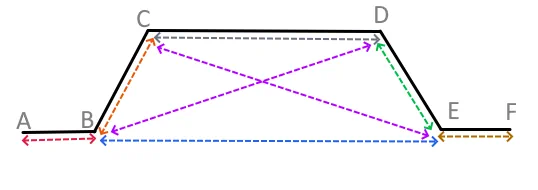
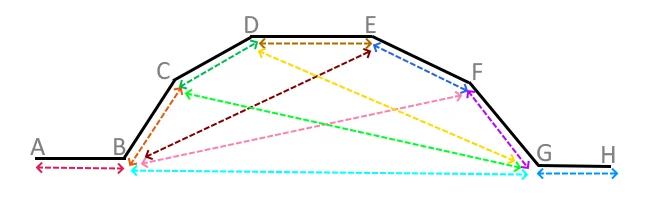
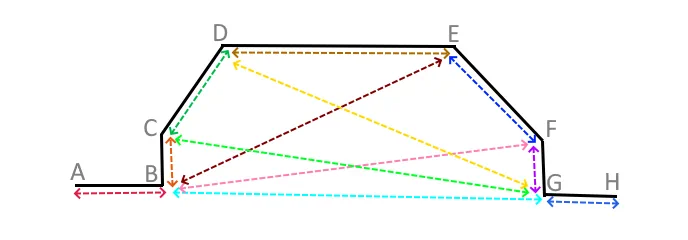
Can Wave Curtains Go Around Corners and Bends?
Yes, wave curtains can go around corners and bends when they are used with a suitable made-to-measure wave curtain track.
The track itself can usually be shaped to follow bay windows, corners and returns. The more important question is whether the curtain has enough room to move around those bends without catching.
Wave curtains need more careful planning than standard curtains because the fabric forms smooth rolling folds beneath the track.
This guide explains what needs to be right for wave curtains to move smoothly around corners, bends and bay windows.

Can Wave Curtains Go Around Corners and Bends?
Yes. Wave curtains can go around corners and bends, provided the track is made correctly and the curtains have enough space to move freely.
This means wave curtains can often be used in bay windows, square bays, curved bays and around return walls.
The important thing is not just whether the track can bend. It is whether the finished curtain can move around the bend without rubbing on the window sill, wall, brackets or other obstructions.
Lee’s Advice
The bend itself is rarely the biggest problem. Most wave curtain issues around bends are caused by the curtain not having enough room to form its waves properly.
The Bend Is Usually Not the Problem
Many people assume the main question is whether a wave curtain track can physically go around a bend.
In most cases, the answer is yes. A properly made wave curtain track can be shaped to follow the bay window or corner layout.
The bigger question is what happens once the curtain is hanging from the track.
Wave curtains move forwards and backwards beneath the track. This is what creates the smooth rolling wave effect.
If the fabric catches on the sill, wall or any other obstruction as it travels around the bend, the waves can become distorted.
Why Clearance Matters More with Wave Curtains
As a general rule of thumb, wave curtain tracks usually need to sit around 10cm forward of any obstruction.
This might be the front edge of a window sill, a side wall, an architrave, a skirting board or another feature within the bay.
This spacing gives the curtain waves enough room to hang naturally as they move forwards and backwards beneath the track.
If the track is fitted too close to the window, parts of the curtain may rub against the sill or other projections within the bay.
With standard curtains, this is often less noticeable because the fabric is gathered in a more random pattern.
Wave curtains are different. The whole point of using wave curtains is to create smooth, evenly spaced folds across the track.
If a window sill pushes part of the curtain forwards, the regular wave pattern can become distorted. Some folds may appear deeper than others, while other sections may flatten out slightly.
The curtains may still open and close, but they may no longer achieve the clean, uniform look that makes wave curtains so attractive.
Lee’s Advice
When I am advising on wave curtains, I am not just checking whether the track will fit. I am checking whether the curtains will have enough room to form the wave pattern properly once they are hanging.
Why Ceiling Fixed Wave Tracks Usually Give More Flexibility
Ceiling fixed wave curtain tracks usually give the greatest flexibility with positioning.
Because the track is fixed directly to the ceiling, it can often be positioned further forward from the window without needing long projection wall brackets.
This makes it easier to give the curtain waves enough clearance from the window sill, side walls and other obstructions.
Ceiling fixing also gives a cleaner appearance because there are no visible wall brackets above the curtain.
For bay windows, this can be especially useful because the track position needs to work around the whole shape of the bay, not just one straight section.
What About Wall Fixed Bay Windows?
Wall fixed wave bay tracks can sometimes work, but they need more careful checking.
Because wave curtains need to sit forward of obstructions, the brackets may need to project the track further into the room.
This can be perfectly fine in some bays, especially on return walls where the curtains hang in front of the brackets and help hide them.
However, every wall fixed bay is different. The depth of the sill, the shape of the bay, the wall position and any coving or trim can all affect what will work.
For this reason, I usually prefer to give exact advice on wall fixed wave bay tracks after seeing a clear photo of the window.
Curved Bays and 5-Sided Bay Windows
Some bay windows look curved, but are actually made from several flat sections joined together at shallow angles.
A common example is what we often call a curved 5-sided bay window. Each window section is flat, but the angle from one section to the next is fairly gentle.
In this type of bay, we will often recommend making the whole track within the bay as one continuous gradual curve, rather than adding several shallow angled bends.
Although both options may be possible, a continuous curved track usually gives a smoother and more pleasing appearance.
This works especially well with wave curtains because the curtain folds already create a soft flowing effect.
A smooth curved track often allows the eye to follow the shape of the curtains more naturally than a track made from a series of small angled sections.
Lee’s Advice
Just because a bay window is made from flat sections does not always mean the track should copy every small angle. With wave curtains, a gradual curve can often look much better.
Do Wave Curtains Stack Around Bends?
Wave curtains can move and stack around bends, but the stack-back position still needs to be considered.
When the curtains are open, the fabric needs somewhere to sit. In many bay windows, this is on the return walls at either side of the bay.
If there are wardrobes, shelving, radiators or other furniture close to the bay returns, the curtain stack may need to be planned more carefully.
The track may go around the bend perfectly, but the open curtains still need enough room to sit without being crushed or pushed out of shape.
Why a Photo of the Bay Window Helps
Measurements are important, but they do not always tell the whole story.
The measurements tell us the shape and size of the bay. A photo shows the details that can affect how a wave curtain track should be positioned.
This might include a deep sill, decorative coving, architrave, a radiator, a low ceiling inside the bay or limited space on the return walls.
Two bay windows can have very similar measurements but need different advice because of these details.
This is why, for more complicated wall fixed wave bays, I usually prefer to see a photo before giving exact advice.
Next Step: Choosing the Right Wave Track for Your Bay
Wave curtains can work beautifully around corners and bends, but the track position needs to be right.
If your bay window has a simple ceiling fixing area, choosing a wave bay track is often straightforward.
If your bay needs to be wall fixed, has deep sills, decorative coving or unusual returns, it is worth getting advice before ordering.
FAQs About Wave Curtains Around Corners and Bends
Yes. Wave curtains can go around bay window bends when the track is made correctly and the curtains have enough clearance to move freely.
Yes. Wave curtain tracks can be made with bends of up to 90 degrees, including real corners used in square bays and return walls.
As a general guide, wave tracks usually need to sit around 10cm forward of obstructions such as window sills, walls or frames so the curtain waves can hang freely.
Usually, yes. Ceiling fixing gives more flexibility with track position and makes it easier to give the curtain waves enough room to move around the bay.
For bays with shallow angles, a continuous curved track often looks smoother and works especially well with wave curtains. However, the best option depends on the shape of the bay.
Still Unsure then Let Us Help You
Let the curtain track finder help you decide which track is best for your window. Or you can get advice on how to deal with your bay window by send a couple of photos.