What Is the Difference Between 60mm and 80mm Wave Gliders?
One of the most common questions about wave curtains is whether to choose 60mm or 80mm wave gliders.
The simple answer is that 60mm wave gliders create more waves across the same track width, while 80mm wave gliders create fewer, more open waves.
The choice affects the number of waves in the curtain, how much fabric is needed, and the overall appearance of the finished curtains.
This guide explains the difference in plain English, so you can understand what each option means before choosing your wave curtain track.
60mm vs 80mm Wave Gliders: Quick Answer
The difference between 60mm and 80mm wave gliders is the spacing between the gliders.
With 60mm wave gliders, the gliders sit closer together. This creates more waves across the same track width.
With 80mm wave gliders, the gliders sit further apart. This creates fewer, more open waves across the same track width.
Neither option is automatically better. They simply create a slightly different look and require different amounts of curtain fabric.
Lee’s Advice
Try not to think of 60mm and 80mm as good or bad. Think of them as more waves or fewer waves. That makes the choice much easier to understand.
What Do 60mm and 80mm Actually Mean?
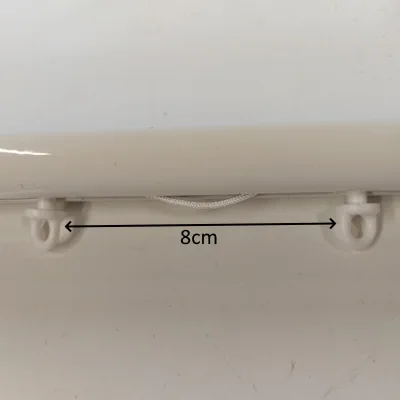
The measurement refers to the maximum spacing between each wave glider.
Wave gliders are joined together by a very thin cord. This cord stops the gliders spreading too far apart.
With 60mm wave gliders, the maximum distance between each glider is 60mm.
With 80mm wave gliders, the maximum distance between each glider is 80mm.
This spacing controls how many wave folds are created across the width of the curtain track.
Do 60mm and 80mm Wave Gliders Change the Depth of the Waves?
This is one of the most common misunderstandings about wave curtains.
Choosing 60mm or 80mm wave gliders does not really change the depth of the curtain waves.
The main difference is how many waves are created across the width of the track.
With 80mm wave gliders, the waves are spaced further apart. This gives the curtain a more open, rounded wave appearance.
With 60mm wave gliders, the waves sit closer together. This creates more waves across the same track length and can give the impression of a deeper or fuller wave.
In reality, the depth of the wave is very similar. The closer spacing simply changes the visual appearance.
How Do 60mm and 80mm Wave Curtains Look Different?
80mm wave gliders create fewer waves across the track, so the finished curtains tend to look more open and relaxed.
60mm wave gliders create more waves across the same track width, so the curtains can look fuller and slightly busier.
Both options still create the smooth wave effect. The difference is mainly in how many waves you see across the window.
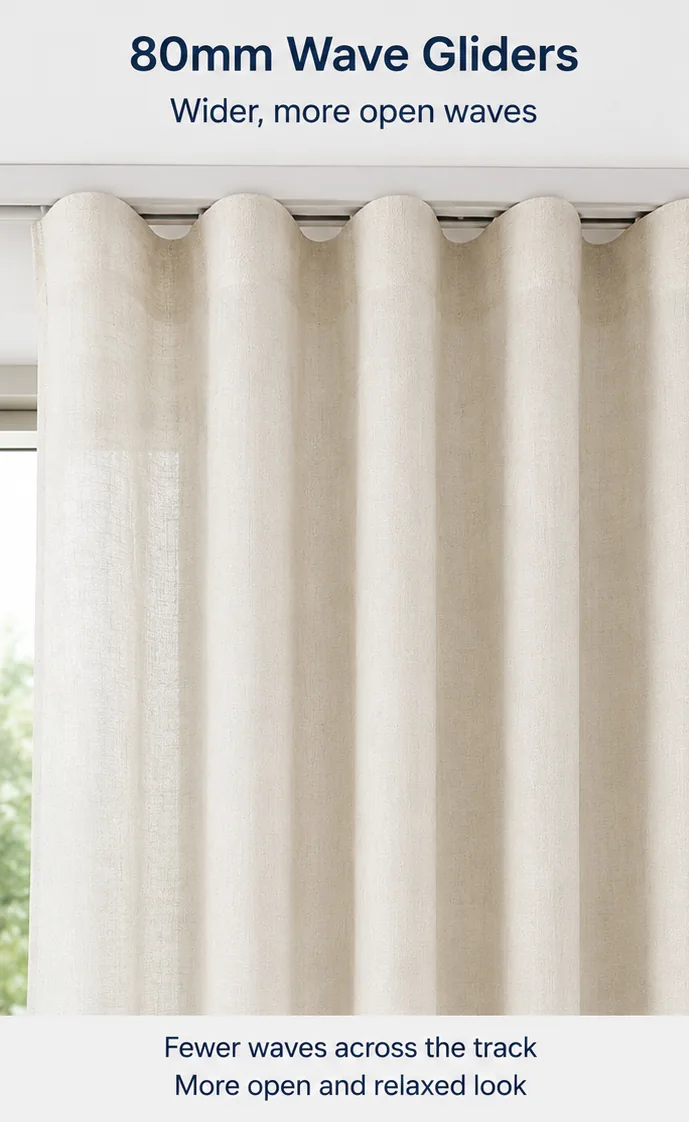
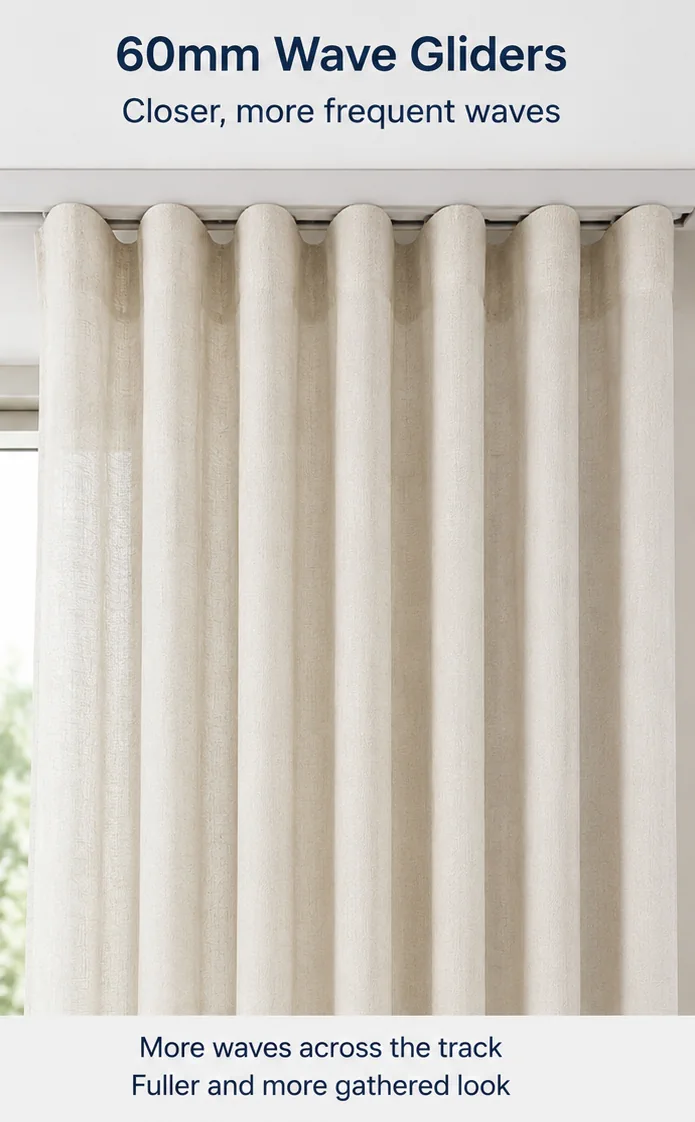
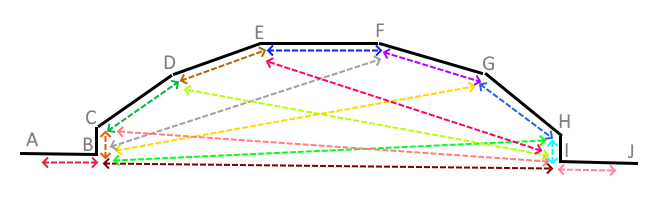
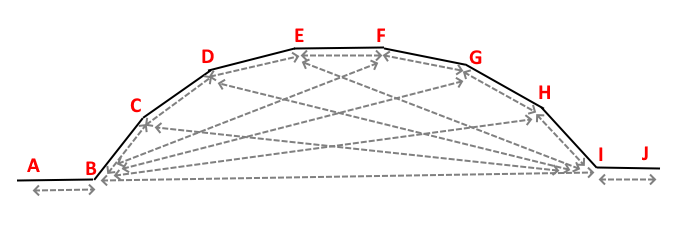
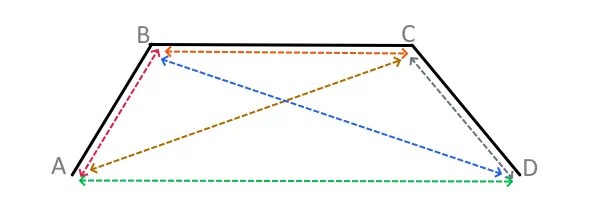
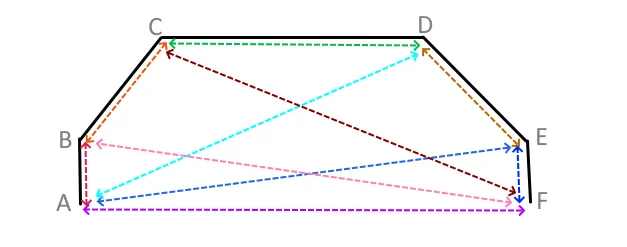
Example: 350cm Bay Window Curtain Track
To make the difference easier to picture, let’s use a 350cm bay window curtain track as an example.
On a track around this size:
- 80mm wave gliders would usually create around 11 forward-facing waves on each curtain.
- 60mm wave gliders would usually create around 15 forward-facing waves on each curtain.
This is why 60mm wave curtains appear to have more folds across the same window width.
The curtain hook spacing on the wave heading tape is usually the same for both options. The hooks are normally placed around every 15th or 16th pocket, with the end hooks set in around 7 or 8 pockets from each end.
The 350cm Example Is Only a Guide
The 350cm example above is simply there to show the difference between 60mm and 80mm wave gliders.
Every bay window is different, and the actual number of waves will depend on the finished wave track length and the wave glider system being used.
It is also important to understand that wave curtain widths are not normally calculated from the bay window size itself.
The bay window measurements are used to make the curtain track. Once the track has been made, the curtain width is usually worked out from either the finished wave track width or the actual number of wave gliders fitted to the track.
Lee’s Advice
Use the bay size to help understand the example, but do not use it as the final curtain making measurement. The finished wave track length or glider count is what really matters.
How Much Fabric Do 60mm and 80mm Wave Curtains Need?
Because 60mm wave gliders create more waves, they usually need more fabric than 80mm wave gliders.
As a general guide:
- 80mm wave gliders usually need curtain fabric around 2.1 times the wave track width.
- 60mm wave gliders usually need curtain fabric around 2.3 times the wave track width.
The extra fabric used with 60mm wave gliders allows for the extra waves in the curtain.
Some curtain makers prefer to calculate the finished curtain width by counting the number of wave gliders on the track rather than using a simple track width multiplier.
If you want to compare different track widths, our wave curtain measuring guide includes a calculator to help you understand the likely curtain width needed.
Which Is Best: 60mm or 80mm Wave Gliders?
Neither option is automatically better. It depends on the look you prefer and the amount of fabric you are happy to use.
80mm wave gliders are a good choice if you prefer a more open, rounded wave with fewer folds across the track.
60mm wave gliders are a good choice if you prefer more waves and a fuller-looking curtain.
If you are trying to keep fabric costs slightly lower, 80mm wave gliders will usually require a little less fabric.
If you like the idea of a fuller wave effect with more folds, 60mm wave gliders may be the better option.
Lee’s Advice
For most homeowners, the simplest way to choose is by appearance. 80mm gives fewer waves, but with a more rounded look. 60mm gives you more waves with a tighter fold and less pace between each wave.
FAQs About 60mm and 80mm Wave Gliders
The difference is the spacing between the gliders. 60mm gliders sit closer together and create more waves. 80mm gliders sit further apart and create fewer, more open waves.
Not really. The wave depth is very similar. 60mm gliders create more closely spaced waves, which can make the curtain look fuller or deeper.
Yes. Because 60mm gliders create more waves across the track, they usually need more fabric than 80mm wave gliders.
Not necessarily. 80mm gliders create fewer, more open waves and usually need slightly less fabric. 60mm gliders create more waves and a fuller appearance.
No. The bay size helps determine the track shape, but wave curtain width is usually calculated from the finished wave track length or the actual number of wave gliders on the track.
Next Step: Measuring for Wave Curtains
Once you understand the difference between 60mm and 80mm wave gliders, the next step is making sure the curtain width is calculated correctly.
This is especially important for bay windows, where the finished track length may be different from the simple front-to-back bay measurements.
Our wave curtain measuring guide explains what information is needed and includes a calculator to help compare wave curtain widths.
Still Unsure then Let Us Help You
Let the curtain track finder help you decide which track is best for your window. Or you can get advice on how to deal with your bay window by send a couple of photos.