Wall Fix vs Ceiling Fix Curtain Tracks
One of the most common questions with bay window curtain tracks is whether the track should be wall fixed or ceiling fixed.
Many people assume wall fixing is the normal or stronger option, but this is not always true. In many bay windows, ceiling fixing gives a neater finish, better positioning, and allows the curtains to hang properly in front of deeper window sills.

Quick Answer
For most bay windows, ceiling fixing is usually the best option. It gives more flexibility over where the track is positioned and often creates a neater, more professional-looking finish.
Wall fixing can still be useful in some situations, especially where there is no suitable ceiling fixing point, or where the track needs to be fitted just above the window. However, for deeper window sills and longer curtains, ceiling fixing is usually the better solution.
Why Ceiling Fixing Often Works Best
Ceiling fixing allows the curtain track to be positioned exactly where it needs to be. This is especially useful in bay windows because every bay is slightly different.
With ceiling fixing, the brackets are usually less noticeable because they sit above the track. This often gives a cleaner finish than wall brackets, which can be more visible above the window.
Ceiling fixing also gives more flexibility if the curtains need to hang in front of a window sill, radiator, or other obstruction.
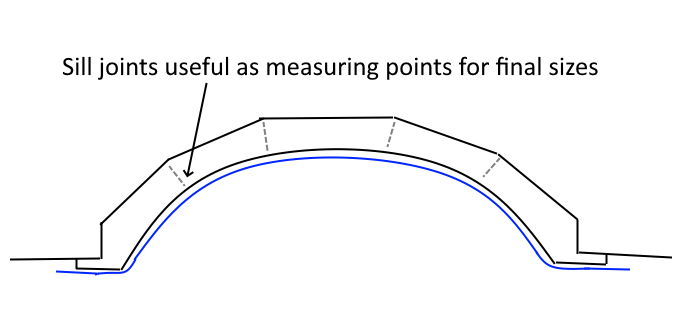
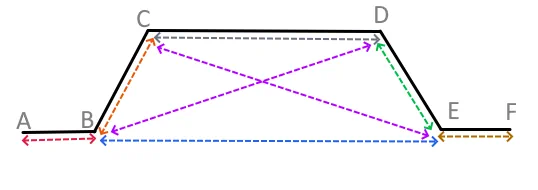
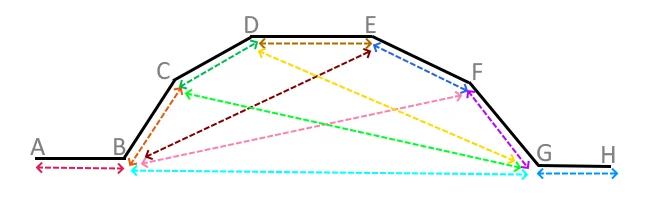
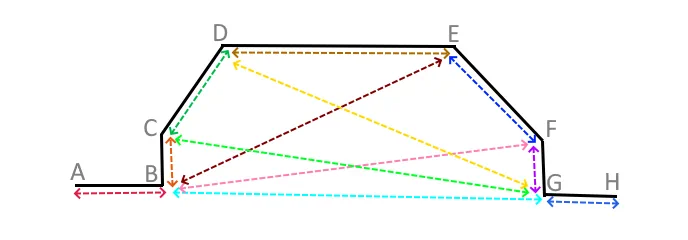
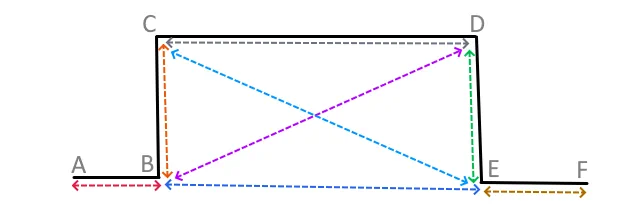
The diagram above shows the position of the track for long curtains. This track also returns out of the bay on each side.
When Wall Fixing Can Still Be Useful
Wall fixing can work well in some bay windows, especially where the curtains are only hanging down to the top of the window sill and staying within the bay.
Wall brackets can also be useful where ceiling fixing is not possible, or where the bay ceiling and room ceiling create an awkward fixing position.
However, wall brackets do have limits. The track can only sit as far away from the wall as the bracket projection allows.
Why Deep Window Sills Cause Problems with Wall Fixing
Many bay window sills project around 20cm to 23cm into the room. The longest wall brackets we supply project the track around 10cm from the wall when fitted.
This means that even with longer wall brackets, the curtains can still be pushed forward by the window sill if they are hanging past the sill, down to a radiator, or down to the floor.
Shorter wall brackets, such as 3cm or 4cm projections, make this issue even more noticeable.
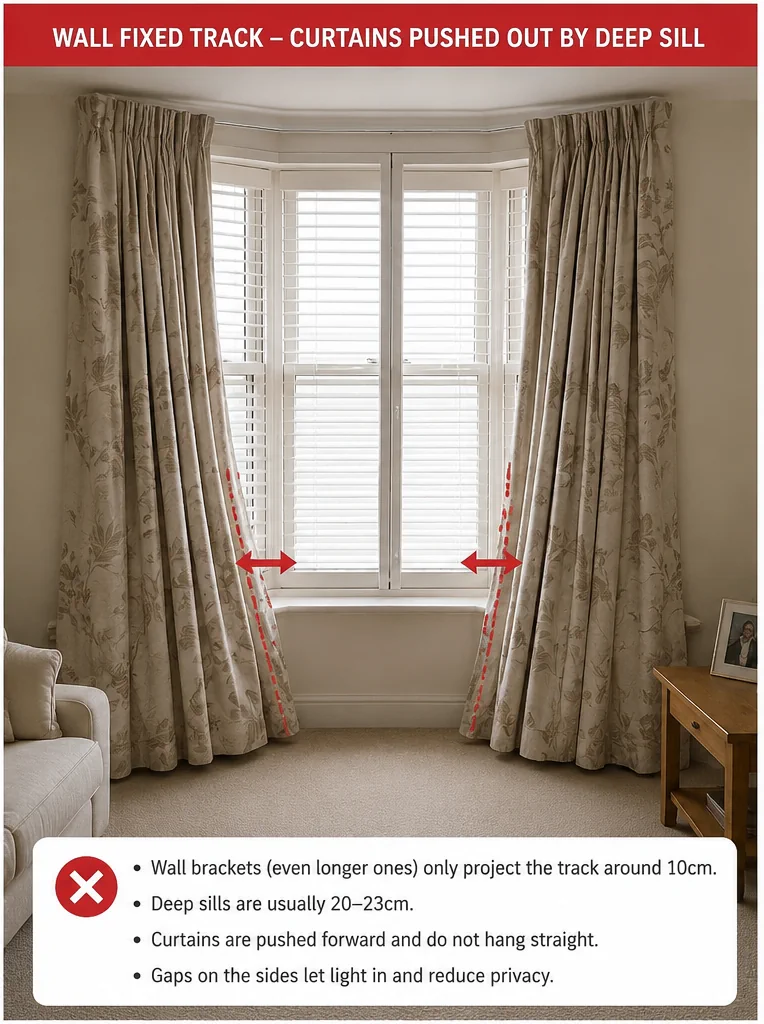
Wall brackets cannot always clear a deep sill
Wall brackets can help bring the track slightly forward, but they cannot always bring the curtains far enough forward to hang naturally in front of a deep sill.
Ceiling Fixing Helps Curtains Hang Straight
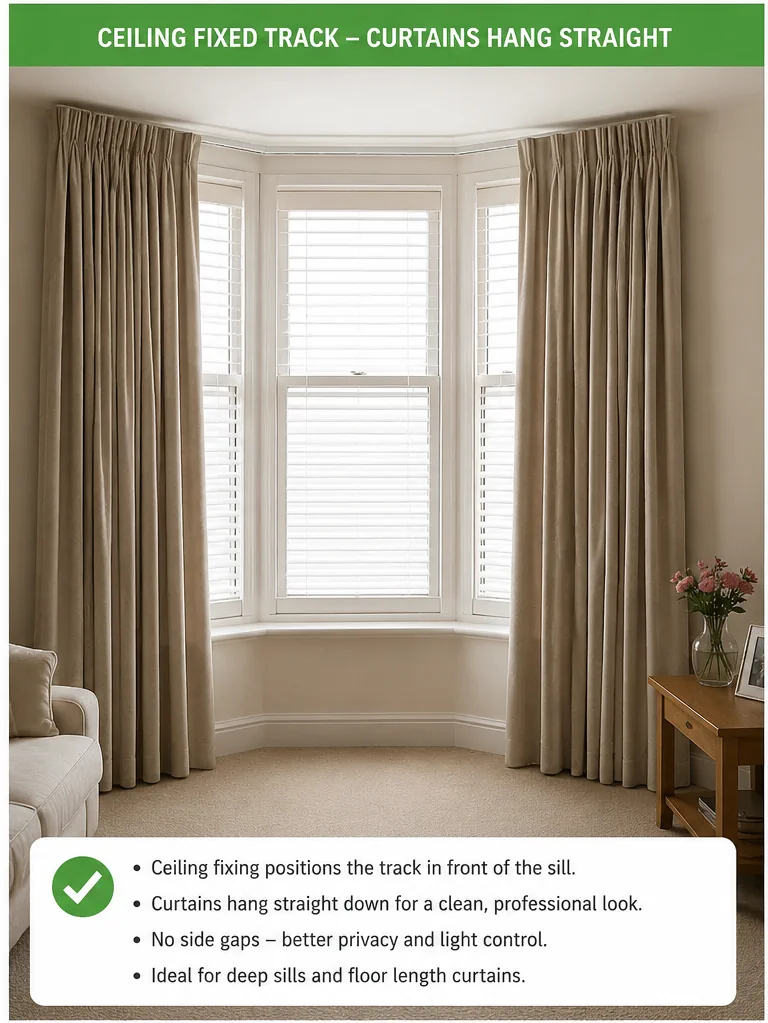
By ceiling fixing the track just in front of the window sill, the curtains can hang straight down instead of being pushed outward by the sill.
This usually gives a much neater finish, especially with longer curtains. It also helps the curtains sit better when open and close more naturally when drawn.
This is one of the main reasons ceiling fixing is often the best choice for bay windows with deeper sills.
Ceiling Fixed Tracks with Wrap Around Returns
In many deeper bay windows, the track does not simply stop inside the bay. Instead, it can wrap around out of the bay on each side using returns.
Not sure what returns are then take a look at the video here “What are returns on a bay window”.
These returns help close the gaps at the sides of the bay. This can improve privacy, reduce light gaps, and give the curtains a more finished look.
If the room ceiling and bay ceiling are the same height, the whole track, including the returns, can usually be ceiling fixed.
Mixing Ceiling Fixing and Wall Fixing
In many homes, the bay ceiling is lower than the main room ceiling. This is very common.
In this situation, the track can often be ceiling fixed inside the bay, then wall fixed on the returns as it comes out into the room.
This mixed fixing method is a normal and practical way to fit bay window curtain tracks. It allows the curtains to hang correctly inside the bay while still returning neatly out into the room.
Coving and Cornice Can Affect Wall Fixing
Wall fixing can also be affected by coving or cornice around the top of the room.
If the space above the window is limited, there may not be enough room to fit a wall bracket properly. This can be especially true with longer projection brackets, which need a deeper fixing area.
This is another reason ceiling fixing is often the cleaner and more flexible option where possible.
Wall Fix vs Ceiling Fix: Quick Comparison
Wall Fix Curtain Tracks
- Can work for sill-length curtains
- Useful where ceiling fixing is not possible
- Limited by bracket projection
- Can struggle with deep window sills
- Brackets are usually more visible
Ceiling Fix Curtain Tracks
- Usually gives a neater finish
- Allows more flexible track positioning
- Better for deep window sills
- Helps curtains hang straight
- Often best for longer curtains
So Which Option Should You Choose?
If you want your curtains to hang inside the bay and only down to the top of the sill, wall fixing may work. However, ceiling fixing can still give a neater and more flexible finish.
If your bay has a deep sill, or you want longer curtains to hang in front of the sill, ceiling fixing is usually the best option.
The main thing is to position the track where the curtains can hang naturally. In many bay windows, that means fixing the track to the ceiling just in front of the sill.
Frequently asked questions
Yes. Ceiling fixing is a very common and reliable way to fit bay window curtain tracks when the correct fixings are used.
It is often the best option for deeper bays because it allows the track to be positioned where the curtains can hang properly.
Not usually. Wall fixing can work well in some situations, but ceiling fixing often gives more flexibility and a neater finish.
For deep window sills or longer curtains, ceiling fixing is usually the better choice.
Not always. Many bay window sills project around 20cm to 23cm, while even longer wall brackets may only project the track around 10cm from the wall.
This means long curtains can still be pushed outward by the sill instead of hanging straight down.
Yes. This is very common where the bay ceiling is lower than the main room ceiling.
The track can be ceiling fixed inside the bay, then wall fixed on the returns as it comes out into the room.
Ceiling fixing allows the track to sit just in front of the window sill.
This means the curtains can hang straight down, rather than being pushed forward by a deep sill.
Yes. If there is coving or cornice above the window, there may not be enough clear wall space to fit wall brackets properly.
This is especially true with longer projection wall brackets.
Need Help Choosing the Best Fixing Option?
If you are still unsure whether your bay window curtain track should be wall fixed or ceiling fixed, start with our Track Finder or send us a photo of your bay window for advice.
Seeing the shape of the bay, the depth of the window sill, and how you want the curtains to hang usually makes it much easier to recommend the best setup.