Why Can’t My Curtain Track Follow the Window Frame Exactly?
When measuring a bay window for a curtain track, it is natural to concentrate on the shape of the window frames and the walls around them.
However, the visible shape of your bay window is not always the shape your curtain track should follow.
The correct track position depends on how you want your curtains to hang.
If you want longer curtains hanging in front of the window sill, the track will normally need to follow the shape of the sill rather than the window frames behind it.
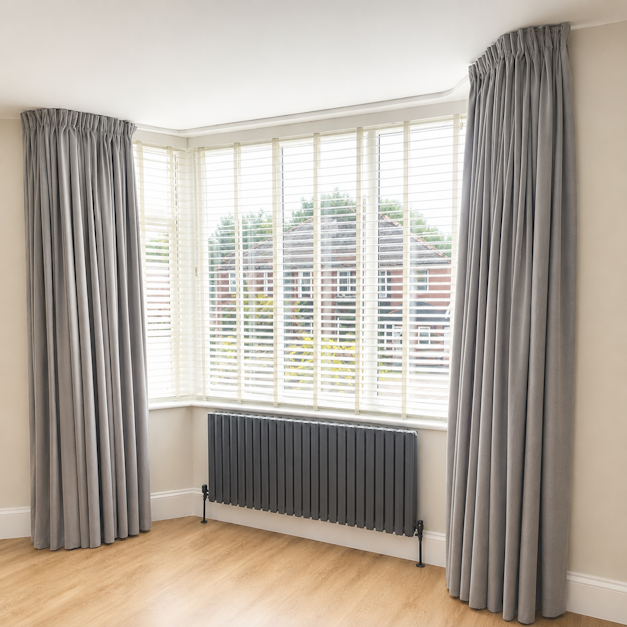
Start by Deciding How You Want Your Curtains to Hang
When people begin planning curtains for a bay window, they often start by trying to identify the exact shape of the bay.
They may count the windows, walls and angles before carefully measuring around every section of the window frames.
This is understandable. There is a great deal of advice about choosing the correct bay shape and measuring every side accurately.
However, there is a more important question to answer first:
Lee’s Advice
Don’t measure the shape of your bay. Measure the path your curtains need to follow.
The curtain track is not being made simply to trace the architecture of the window.
Its purpose is to carry the curtains along the correct path and allow them to hang freely without rubbing against the window sill, frames or handles.
Once you decide how long the curtains will be and whether they will hang inside or in front of the bay, the correct track position becomes much easier to understand.
The Two Possible Curtain Track Positions
There are two valid ways to position curtains in many bay windows.
Neither option is automatically right or wrong. They simply create different curtain layouts and require the bay to be measured from different positions.
The Important Difference
Short curtains that finish at the top of the sill can normally hang within the bay.
Longer curtains that continue below the sill normally need to hang in front of it.
Option 1 – Short Curtains Hanging Within the Bay

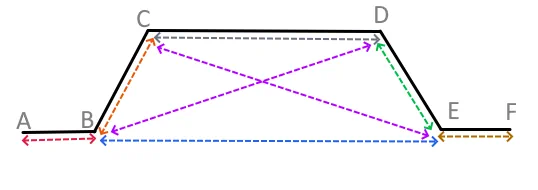
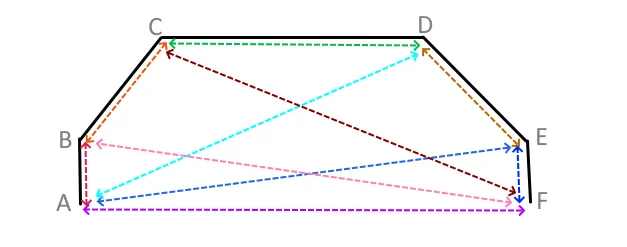
Show the curtain track following the window frames and side walls inside a five-sided bay
Curtains remain behind the front edge of the window sill
If you only want shorter curtains that finish at the top of the window sill, the curtain track can normally remain within the bay.
In this arrangement, the track may follow the window frames and the small side walls around the inside of the bay.
The curtains hang behind the front edge of the sill and frame the windows rather than continuing down into the room.
Measuring around the window frames may therefore be completely correct for this type of curtain layout.
This Position Is Suitable When:
The curtains will finish at or just above the top of the window sill.
The curtains will remain entirely within the bay.
You do not need the curtain fabric to pass in front of a deep or projecting sill.
The windows and handles have sufficient clearance from the track and curtains.
This remains a perfectly valid curtain option, although it is generally less popular than hanging longer curtains in front of the sill.
Option 2 – Longer Curtains Hanging in Front of the Window Sill

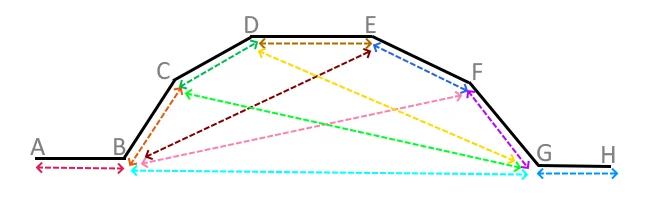
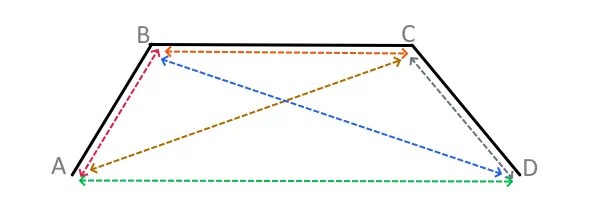
Show the curtain track following the front edge of a three-sided window sill rather than the five-sided window-frame line
Include curtain track returns extending out of the bay on both sides
If you want the curtains to hang below the sill or continue down to the floor, the track normally needs to sit in front of the window sill.
The curtains must be able to drop vertically without the sill pushing the fabric forward or causing it to bunch inside the bay.
In this situation, the front edge of the sill becomes the important measuring line.
The curtain track may therefore follow a different shape from the window frames and walls behind it.
The track will also normally return out of the bay on both sides. These returns bring the outside edges of the curtains closer to the adjoining walls and help prevent large gaps when the curtains are closed.
This Position Is Suitable When:
The curtains will hang below the window sill.
You want floor-length curtains.
The curtains need to clear a deep or projecting window sill.
You want the track to return beyond the bay to provide better side coverage.
This is the curtain layout most customers choose today, particularly when they want the room to feel taller and the bay to appear fully dressed.
Why Can the Window Shape and Window-Sill Shape Be Different?
The window frames, side walls and window sill are not always positioned on the same line.
Window frames can be recessed well behind the front edge of the sill.
The small walls at each side of the bay may also create additional angles that do not continue along the front edge of the sill.
This means a bay can have one architectural shape around its frames and walls, but a different curtain path in front of the sill.
A Track Can Fit the Window but Still Be Wrong for the Curtains
A curtain track can follow the window frames perfectly and still be unsuitable for the way you want your curtains to hang.
If the track sits behind a deep sill, longer curtains will not be able to hang freely down towards the floor.
The measurements may be accurate. They have simply been taken from a position that represents a different curtain layout.
Why Does This Cause More Confusion in Some Types of Home?
Not all bay windows are built in the same way.
In some properties, the shape around the windows and the shape of the sill are very similar.
In others, they can be completely different.
Victorian and Edwardian Bay Windows
Many Victorian and Edwardian bay windows have relatively shallow window sills that do not project very far into the room.
The sill also often follows the general shape of the bay window.
In these homes, the window-frame line and the front edge of the sill may have almost the same outline.
This means that measuring around the bay itself is less likely to produce a completely different track shape.
There are exceptions, so the curtain position should still be considered before measuring.
1930s Splay Bay Windows
The confusion is especially common in homes built during the 1930s, particularly those with what we call a splay bay window.
This type of bay commonly has three windows, with a short sloping side wall at each end.
When the side walls and window sections are counted, the bay itself is effectively five-sided.
However, the front edge of the window sill often forms a much simpler three-sided shape.
The five-sided shape describes the window frames and walls within the bay.
The three-sided shape describes the front edge of the sill and the path that longer curtains normally need to follow.
The 1930s Bay Window Measuring Mistake
Customers often carefully measure all five sides of the bay because that is the architectural shape they can see.
However, if they want floor-length curtains hanging in front of the sill, the required track may only need to follow the three-sided sill shape.
The five-sided measurement is not necessarily inaccurate. It simply describes curtains hanging within the bay rather than in front of it.
Why Do People Measure the Wrong Shape?
Most people measuring a bay window have never completed this type of project before.
They naturally read advice about identifying the correct bay shape, counting the sides and measuring every wall accurately.
They then focus on reproducing the exact shape of the windows and walls.
The measurements may be taken very carefully, but the customer has started by answering the wrong question.
The Better Question
Do not begin by asking:
“What shape is my bay window?”
Begin by asking:
“How do I want my curtains to hang on this window?”
Once that has been decided, you can identify the path the curtains need to follow and measure the bay from the correct position.
How to Choose the Correct Measuring Line
1. Choose Your Curtain Length
Decide whether the curtains will finish at the top of the sill, below the sill, above a radiator or at floor level.
2. Decide Whether the Curtains Will Hang Inside or in Front of the Bay
Short sill-length curtains may be able to remain within the bay.
Longer curtains will normally need to hang in front of the sill.
3. Look at the Bay from Above
Imagine looking down on the window and picture the route the hanging curtains will need to follow.
This imagined line is more important than the shape of the window frames behind it.
4. Measure the Shape at the Required Curtain Position
Measure the walls or window-frame line if the curtains will remain within the bay.
Measure the front edge of the sill if the curtains will hang in front of it.
5. Check the Complete Curtain Route
Make sure the track and curtains will clear window handles, blinds, radiators, furniture and the full depth of the sill.
Also decide whether the track needs to return beyond the bay at one or both sides.
Which Line Should I Measure?
If your curtains will remain within the bay and finish at the top of the window sill, measuring the window frames and walls may be the correct approach.
If your curtains will hang in front of the sill and continue below it, you should normally measure the shape formed by the front edge of the window sill.
Do not automatically choose the line that appears to represent the architecture of the bay most accurately.
Choose the line that represents the path your curtains need to follow.
What I See as the Designer
When a customer sends me measurements taken tightly around the window frames, one of the first things I look at is the depth and shape of the window sill.
I then ask how they want the curtains to hang.
If they want floor-length curtains but have measured behind a deep projecting sill, their measurements describe a different curtain layout from the one they actually want.
The measurements may be perfectly accurate, but they have been taken from the wrong track position.
The solution is normally not to make a small adjustment to the existing measurements.
It is to identify the correct curtain path and measure the bay again from that position.
Key Takeaway
Your curtain track does not always need to follow the window frames exactly.
If you want shorter curtains that remain within the bay and finish at the top of the sill, the internal bay shape may be correct.
If you want longer curtains hanging in front of the sill, the track will normally need to follow the front edge of the sill instead.
This distinction is particularly important in 1930s splay bay windows, where the bay itself may be five-sided but the window sill is only three-sided.
Don’t measure the shape of your bay. Measure the path your curtains need to follow.
Not Sure Which Part of Your Bay Window to Measure?
The correct measuring position is often easier to understand from photographs than from measurements alone.
Send us a clear photograph showing the complete bay, including the window sill, ceiling and the walls at both sides.
Also tell us whether you want curtains finishing at the sill, below the sill or at floor level.
We can then help you understand which shape your curtain track needs to follow before you begin measuring.
Photographing Your Bay Window
Stand far enough back to include the whole bay and its surrounding walls.
A second photograph taken from one side can help show how far the window sill projects beyond the frames.