How Wide Should Wave Curtains Be?
Wave curtains need to be wider than the curtain track so the fabric can form the smooth, even waves this curtain style is known for.
The width of your wave curtains is worked out from the finished wave curtain track, not simply from the size of the window or bay.
The type of wave gliders on the track also matters. 80mm wave gliders usually need less fabric than 60mm wave gliders because they create fewer waves across the same track width.
This guide explains how wave curtain widths are usually worked out and why fabric choice is just as important as the calculation.
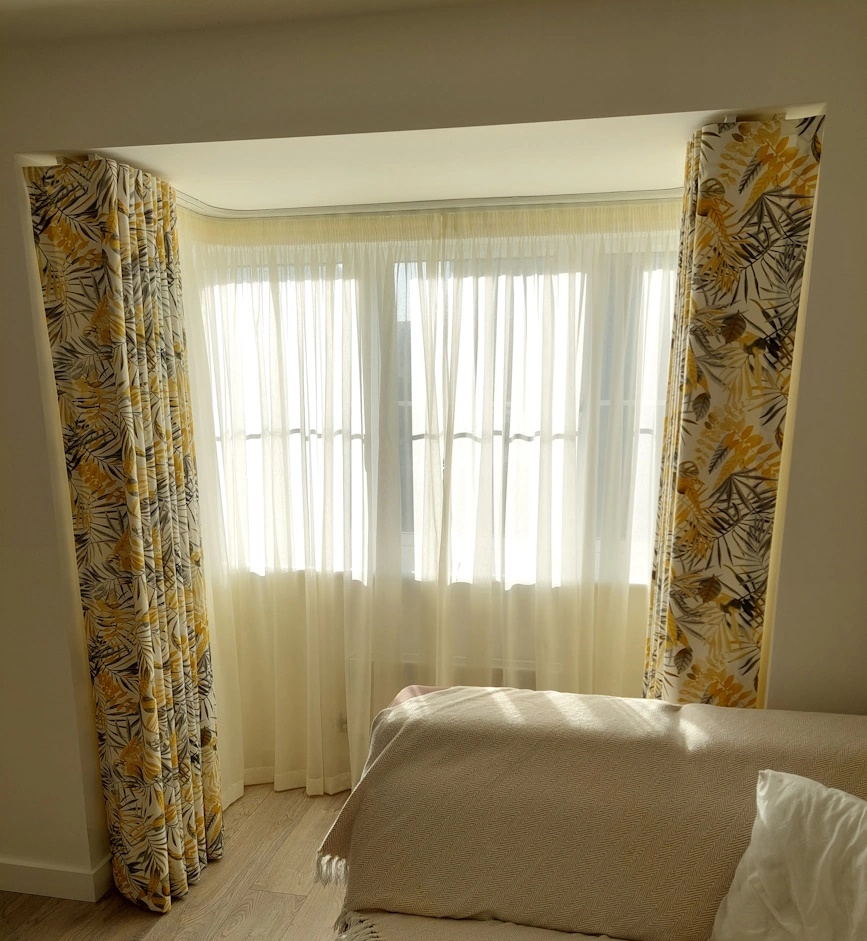
How Wide Should Wave Curtains Be?
As a general guide, wave curtains are usually made around 2.1 to 2.3 times the finished wave track width, depending on the wave glider spacing.
For 80mm wave gliders, the total curtain width is usually around 2.1 times the track width.
For 60mm wave gliders, the total curtain width is usually around 2.3 times the track width.
This total width is then split between the pair of curtains, assuming you are having one curtain on each side.
Lee’s Advice
The most important thing to remember is that wave curtain width is worked out from the finished wave track, not from the bay window measurements alone.
Choose the Wave Track First
Before ordering wave curtains, you need to know what wave track they will be hanging from.
This is because the track controls the wave system. The finished track length, the type of wave gliders and the number of gliders all affect the curtain width needed.
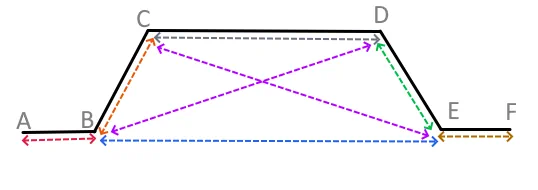
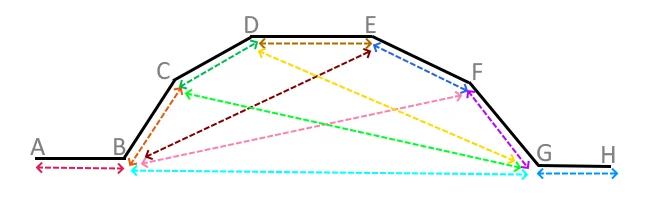
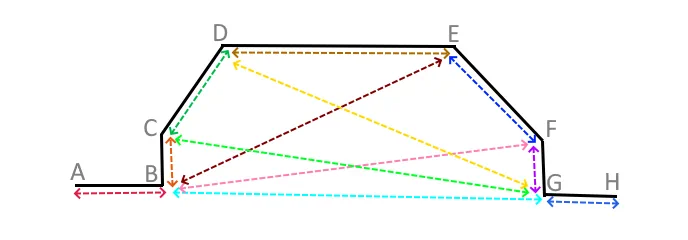
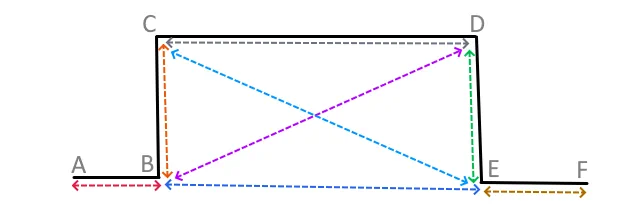
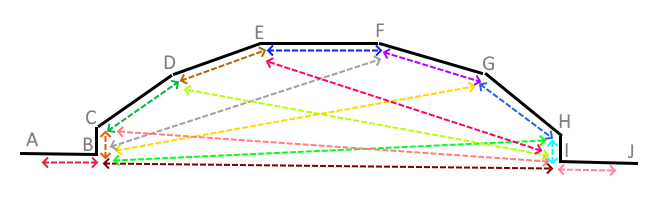
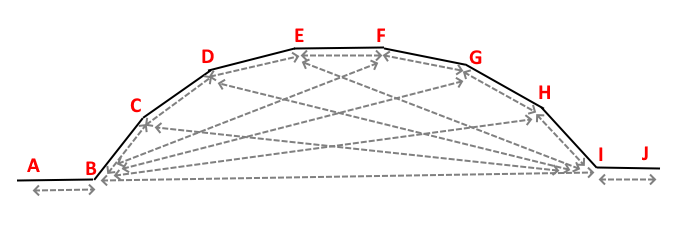
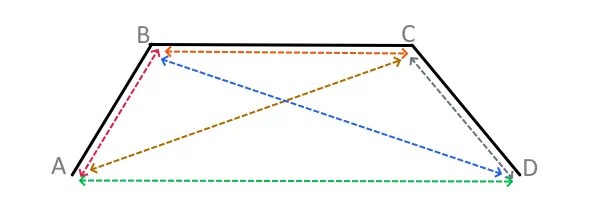
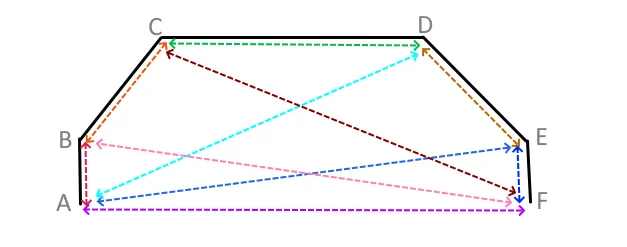
If you are ordering a made-to-measure wave bay track, the bay measurements are used to make the track to the correct shape.
Once the finished track width is known, the curtain width can then be calculated properly.
Measure the Finished Wave Track Width
Wave curtains should normally be calculated from the finished curtain track width.
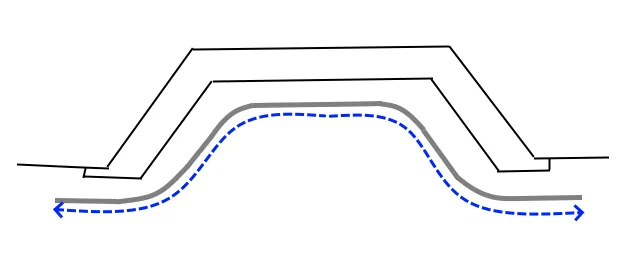
This is especially important with bay windows because the finished track length may be different from the simple front width of the bay.
A bay track follows the shape of the window, including bends, returns and side sections. This means the full track length is usually longer than a simple straight measurement across the front of the bay.
If you calculate from the window size instead of the finished track length, the curtains may end up too narrow.
Example Using 80mm Wave Gliders
80mm wave gliders are the most popular option for many wave curtain tracks.
As a general guide, curtains for 80mm wave gliders are usually made around 2.1 times the finished track width.
For example, if your finished wave curtain track is 300cm wide:
- 300cm track width × 2.1 = 630cm total curtain width
- 630cm ÷ 2 = 315cm per curtain
So for a pair of curtains, each curtain would be made to a finished width of around 315cm.
Example Using 60mm Wave Gliders
60mm wave gliders sit closer together than 80mm wave gliders, which means they create more waves across the same track width.
Because there are more waves, more curtain fabric is usually needed.
As a general guide, curtains for 60mm wave gliders are usually made around 2.3 times the finished track width.
For example, if your finished wave curtain track is 300cm wide:
- 300cm track width × 2.3 = 690cm total curtain width
- 690cm ÷ 2 = 345cm per curtain
So for a pair of curtains, each curtain would be made to a finished width of around 345cm.
If you are unsure which system you have, read our guide to 60mm and 80mm wave gliders.
Why Some Curtain Makers Use the Glider Count
Some curtain makers prefer to work out the finished curtain width by counting the number of wave gliders on the track.
This is because each wave glider needs a fixed amount of curtain fabric between it and the next glider.
Once the curtain maker knows how many wave gliders are on the track, they can calculate the curtain width very accurately.
This is a more detailed way of working than using a simple track width multiplier, but both methods are based on the same principle: the curtain width is controlled by the wave track system.
Why Fabric Choice Matters with Wave Curtains
The curtain width calculation is important, but it is not the only thing that affects the finished look.
Wave curtains rely on the fabric forming smooth, regular folds from the top of the curtain down to the bottom.
If the fabric is not suitable, the curtains may be the correct width but still not hang as neatly as you expected.
This is why fabric choice matters so much with wave curtains.
Lee’s Advice
A good wave track can only do its job if the fabric is suitable for wave curtains. The track creates the spacing, but the fabric still needs to hold the shape.
Why Wide Railroaded Fabric Can Look Better
If you want the neatest finish, it is often worth choosing a fabric that can be railroaded.
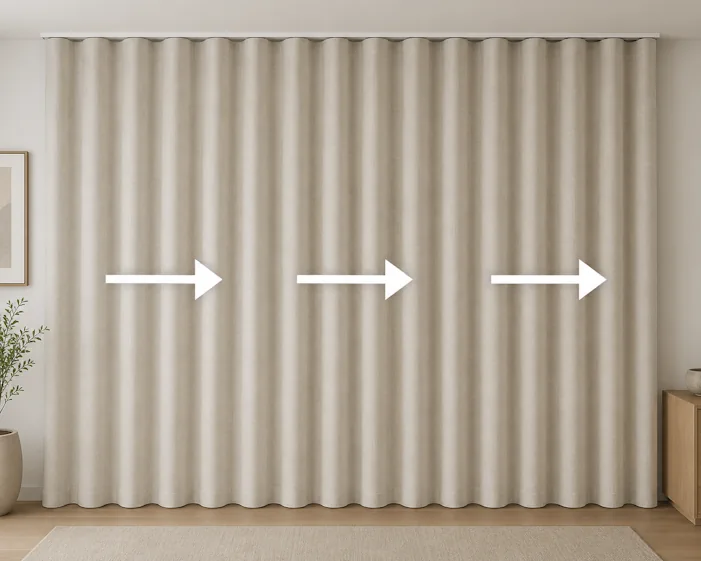
Railroaded fabrics are usually much wider than standard curtain fabrics, often around 280cm to 300cm wide.
Instead of the fabric running down the window, the fabric is turned sideways so the fabric width becomes the curtain drop.
This allows the curtain maker to make very wide wave curtains without joining several widths of fabric together.
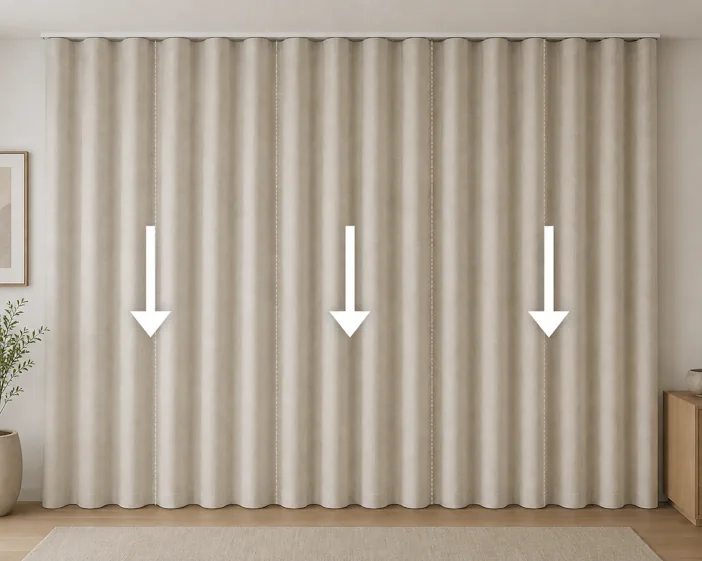
Traditional curtain fabrics are often around 140cm to 150cm wide. To make wide curtains from these fabrics, several widths usually need to be sewn together.
Joins are not always a problem, but on wave curtains they can be more noticeable because the seams may end up sitting on the front of the wave folds.
This is why wide railroaded fabric often gives a cleaner result for wave curtains, especially on wider windows or bay windows.
Are All Fabrics Suitable for Wave Curtains?
No. Not every curtain fabric is ideal for wave curtains.
Some fabrics naturally fall into smooth waves and hold the shape beautifully from the top of the curtain to the bottom.
Other fabrics look good at the top but gradually lose the wave shape as the fabric drops down.
The bottom of the curtain may start to open out, flatten or hang less neatly than expected.
This does not mean the track or gliders are wrong. It usually means the fabric is not holding the wave shape well.
If you are choosing your own fabric, ask the fabric supplier or curtain maker whether it is suitable for wave curtains before ordering.
Use Our Wave Curtain Width Calculator
If you want to compare different track widths or wave glider options, our wave curtain measuring guide includes a simple calculator.
You can enter your finished wave track width and see the approximate curtain width needed for different wave systems.
The calculator is intended as a guide. Your curtain maker may still calculate the final curtain width using the actual number of wave gliders on your track.
Next Step: Plan the Track and Curtains Together
Wave curtains work best when the track, gliders, curtain width and fabric choice are planned together.
Start with the correct wave track for your window, then use the finished track width or glider count to calculate the curtain width.
If you are ordering curtains separately from your track, make sure your curtain maker knows the track width and the wave glider spacing being used.
FAQs About Wave Curtain Widths
As a general guide, wave curtains are usually made around 2.1 to 2.3 times the finished track width, depending on the wave glider spacing.
Wave curtain width should normally be calculated from the finished wave track width, not simply from the window or bay size.
For 80mm wave gliders, the total curtain width is usually around 2.1 times the finished track width.
For 60mm wave gliders, the total curtain width is usually around 2.3 times the finished track width.
No. Some fabrics hold the wave shape much better than others. It is always worth checking with your fabric supplier or curtain maker before ordering.
Still Unsure then Let Us Help You
Let the curtain track finder help you decide which track is best for your window. Or you can get advice on how to deal with your bay window by send a couple of photos.